When someone calls another person a "crazy bird," they almost always mean it as a playful, affectionate tease rather than a serious insult. It's the kind of thing you'd say to a friend who just did something wild, unpredictable, or hilariously over the top. Think: "You crazy bird, I can't believe you actually did that." The tone is usually warm, the intent is light, and the target is expected to laugh. That said, context shifts everything, and a few specific uses of the phrase mean something quite different, so it's worth knowing how to read the room.
Crazy Bird Meaning: Slang, Tone, and How to Interpret It

Marcus Reeves
5 May 2026
What people actually mean when they say "crazy bird"
In everyday speech, "crazy bird" works as a descriptor for a person (or occasionally an actual bird) who is acting erratic, unpredictable, or entertainingly chaotic. It's rarely a clinical statement. More often it's a snapshot reaction: someone just did something unexpected, and "crazy bird" is the verbal equivalent of a raised eyebrow and a grin. You'll hear it in casual conversation, comment sections, and group chats where the vibe is friendly ribbing.
There are a few distinct uses worth separating. First, it's a shorthand descriptor for wild or unpredictable behavior, as in "that crazy bird cut across three lanes of traffic." Second, it's a direct address or nickname, used the way you'd use "you maniac" with a close friend. Third, it sometimes shows up in a more literal sense, where people describe an actual bird acting aggressively or strangely, like a news article calling a swooping, dive-bombing bird a "crazy bird" after it startled pedestrians. And fourth, in certain regional drinking culture contexts, "Crazy Bird" is a nickname for Wild Turkey bourbon, so if someone orders a "crazy bird" at a bar, they're asking for a drink, not commenting on anyone's behavior. For example, a third-party catering menu PDF also uses “CRAZY BIRD” as a specific menu item name, showing that it can appear as a branded food item rather than slang.
How "crazy bird" works as slang and as a nickname
As slang, "crazy bird" sits comfortably in the affectionate-teasing category. It's used most often between friends, family members, or colleagues who have an established rapport. The word "bird" softens "crazy" considerably, pulling the phrase away from anything harsh. Calling someone "crazy" alone can feel pointed; adding "bird" gives it a cartoonish, almost fond quality, like you're describing someone's personality as charmingly unhinged rather than actually unstable.
Who uses it? Broadly speaking, it appears across generations, but it leans informal and tends to come from people who use a lot of animal-based nicknames and metaphors in everyday talk. You'll see it in memes, in captions under videos of someone doing something reckless or goofy, and occasionally as a term of endearment for an eccentric family member. The animated film Rock-a-Doodle has a line that captures this tone exactly: "Come back here, you crazy bird... In the 1992 film Rock-a-Doodle, the scolding line continues as “Now settle down...,” supporting the idea that it is a light, exasperated address rather than a harsh insult Rock-a-Doodle has a line that captures this tone exactly: "Come back here, you crazy bird.... now settle down." It's a reprimand, yes, but one delivered with exasperation and affection, not malice.
As a nickname, "crazy bird" (or just "crazy bird" as a one-off label) functions similarly to "wild one," "loose cannon," or "hot mess." These aren't insults when used between friends. They're identity shorthand, a way of saying "you're the unpredictable one and we love you for it."
The symbolism behind "bird" and why it fits "crazy"
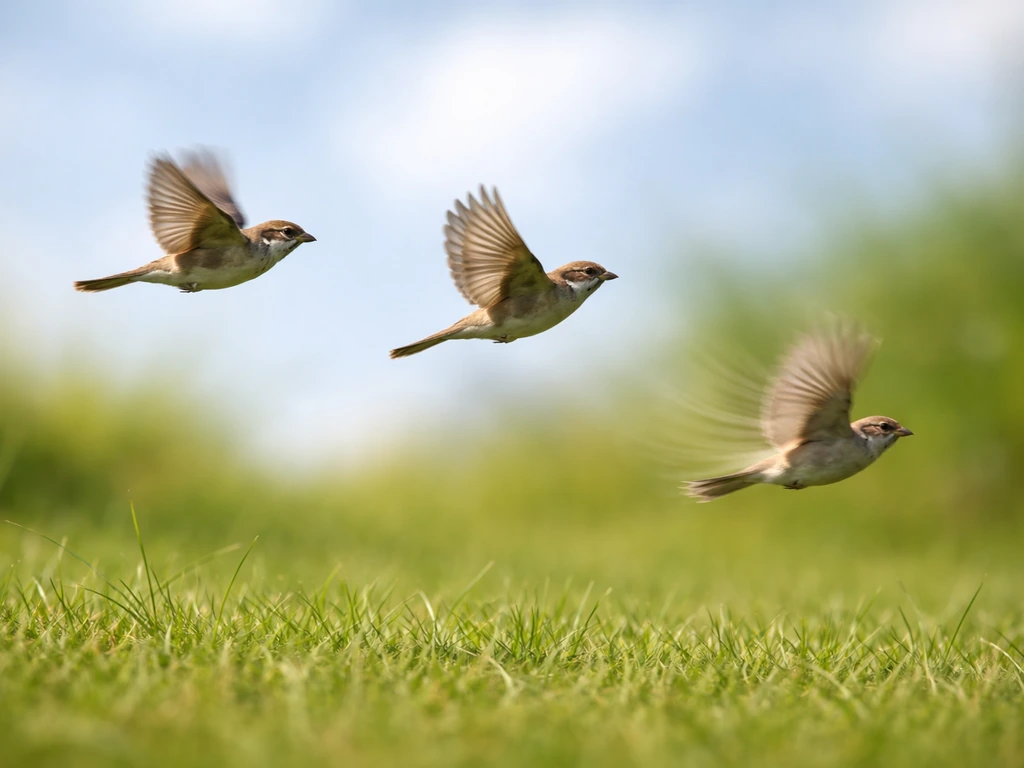
Birds carry a lot of symbolic weight in language and culture, and several of those meanings feed directly into why "crazy bird" lands the way it does. Birds represent freedom, unpredictability, and things that resist being pinned down. A bird that won't settle, that swoops and dives and changes direction mid-flight, is a natural metaphor for a person who operates outside of neat, predictable patterns. Pairing that with "crazy" amplifies the sense of delightful chaos. If you are also curious about the exotic bird meaning behind bird imagery, the symbolism can add another layer to how people interpret the phrase.
In literature and folklore, birds are frequently used to signal outsider status or unconventional thinking. The "crazy bird lady" archetype, someone intensely devoted to birds in ways others find eccentric, has appeared in news stories, urban legends, and pop culture as a mix of comic figure and sympathetic outsider. Urban Dictionary's entry for "crazy bird lady" even illustrates this duality by quoting someone who oscillates between sharp insults and tender affection toward birds, capturing how the phrase can hold two tones at once.
There's also the flight metaphor at play. Calling someone a "crazy bird" implies they're hard to catch, hard to predict, and might just take off without warning. This connects loosely to how bird symbolism works across traditions, where birds often represent spirits, messengers, or souls that move between worlds and refuse to be bound. You don't need to know the mythology for the phrase to carry that energy intuitively.
Close variants and phrases that get mixed up with "crazy bird"
"Crazy bird" has neighbors in the phrase family, and knowing what's different about each one helps you avoid misreading something. Here's how the closest variants compare:
| Phrase | Typical Meaning | Tone |
|---|---|---|
| Crazy bird | Playful tease for erratic/unpredictable behavior; nickname; Wild Turkey bourbon | Affectionate, joking, or descriptive |
| Strange bird | Someone odd or unusual in personality or habits, not necessarily chaotic | Curious, observational, sometimes mildly puzzled |
| Rare bird | Someone exceptional, unique, hard to find; a compliment about distinctiveness | Admiring, positive |
| Odd bird | A mild, slightly formal way of saying someone is peculiar | Neutral to gently amused |
| Crazy as a loon | Comparably wild or irrational behavior, using a specific bird species | Humorous, folksy |
| Flip the bird | A rude hand gesture; has nothing to do with behavior or personality | Vulgar or confrontational |
The phrase that trips people up most often is probably "strange bird," which sounds similar but leans more toward eccentricity than chaos. A strange bird is someone you can't quite categorize; a crazy bird is someone whose energy is genuinely frenetic or over the top. "Rare bird" is a step further into compliment territory, closer to calling someone one of a kind. If you're on a site exploring bird idioms, you'll find that these phrases sit on a spectrum from gentle oddness to high-energy unpredictability, and "crazy bird" lives near the high-energy end.
How to figure out what someone means from context
When you encounter "crazy bird" in the wild and aren't sure what's intended, run through these questions quickly:
- Who is saying it and to whom? Close friends teasing each other read completely differently from strangers or colleagues.
- What's the punctuation and surrounding tone? An exclamation mark and emoji-heavy message signals playfulness. Cold, flat delivery in a heated argument signals something sharper.
- Is it literal or metaphorical? If the sentence is about an actual bird, like a report about an aggressive seagull or parrot, "crazy bird" is just a colorful description of animal behavior.
- Is it quoted from something? Lyrics, movie lines, book quotes, and meme templates reuse phrases in ways that don't reflect the surrounding conversation. Always check if the phrase is pulled from a source.
- What platform is it on? A TikTok caption with a laughing emoji is not the same as a message sent in anger. Social context matters enormously.
- Is it a drink order? In bar or bourbon contexts, especially around Wild Turkey, "Crazy Bird" is a known nickname for the brand. If someone says "pour me a crazy bird," they want bourbon.
The single most useful habit is reading the sentence before and after the phrase. If someone says “you are a rare bird meaning,” they usually mean “you are unusual in a fun, distinctive way,” not a literal statement. "You crazy bird, that was hilarious" is unmistakably fond. A r/Parrots discussion shows that “crazy bird” is used as a playful nickname for birds in everyday talk blank" rel="noopener noreferrer">You crazy bird, that was hilarious. "You crazy bird, you've crossed a line" is not. The modifier changes everything.
Misunderstandings to watch out for
The biggest risk with "crazy bird" is assuming the tone is always light when it isn't. If you're on the receiving end and feel uncertain, it's fair to check in, especially in a work context or with someone you don't know well. The word "crazy" has become more contested in recent years because of its overlap with mental health language, and while "crazy bird" is almost always figurative, not everyone is comfortable with it.
On the flip side, don't assume it's an insult when it isn't. Native speakers and people familiar with casual English idiom use "crazy" as a near-synonym for "wild," "surprising," or "remarkable" constantly. If you also want to understand the rare bird idiom meaning, focus on the surrounding words and the speaker's intent, since tone is what determines whether it's playful or literal crazy bird. Hearing "crazy bird" and reading it as a genuine mental health claim or a cutting insult would be a misread in most cases. The phrase simply doesn't carry that weight in typical everyday use.
One more edge case: when "crazy bird" describes actual bird behavior in a news story or eyewitness account, it's sensationalism, not slang. Reporters and everyday people reach for vivid language when a bird dives at someone's head. That use is purely descriptive and has no social subtext about a person.
Next steps for confirming the meaning in quotes, lyrics, or memes
If you found "crazy bird" in a specific piece of media and want to nail down exactly what it means there, here's what to do:
- Search the exact phrase in quotes alongside the source title. For example: "crazy bird" Rock-a-Doodle or "crazy bird" [song title]. This pulls up the specific usage rather than general definitions.
- Check lyric annotation sites like Genius if the phrase comes from a song. These often have community explanations of regional or slang-specific uses.
- Search the phrase on Know Your Meme if it comes from a meme format. Meme phrases often have tracked origins that clarify the intended tone.
- Look up Urban Dictionary for current slang definitions, but read the example sentences, not just the definitions. The examples show tone better than the definitions do.
- If the phrase comes from a conversation and the tone is ambiguous, ask the person who said it. "Were you being serious or joking?" is a completely reasonable question and far more reliable than guessing.
- If it's from a non-English source translated into English, check whether "crazy" is a direct translation or a loose equivalent, since some languages have affectionate equivalents that map onto "crazy" without the same edge.
The bottom line: "crazy bird" is almost always a playful expression, either a fond tease, a vivid descriptor for erratic behavior, a nickname for someone lovably chaotic, or a bourbon reference. The affectionate interpretation is the right default. When you're not sure, the context around the phrase, who said it, how, and where, will tell you everything you need to know.
FAQ
Is “crazy bird” ever meant as a real insult?
Yes, but it is less common. If it is used in a hostile argument, paired with sarcasm, or followed by consequences like “stop” or “you crossed a line,” it can come off as more cutting than playful. A quick check is whether the speaker also uses similar joking nicknames with you, or if they only use “crazy bird” during conflict.
What should I do if someone says it to me and I am not sure how to take it?
Ask with a light tone to confirm intent, for example, “Are you teasing me?” or “That was funny, right?” In unfamiliar work or school settings, it is safer to clarify than to assume affection, especially if the person does not normally use nicknames with you.
Does the phrase mean something different if it is “you crazy bird” versus “crazy bird” as a description?
Yes. “You crazy bird” is usually direct address, which tends to signal interpersonal tone (tease, nickname, or reprimand). “A crazy bird” as a third-person label often reads as a quick descriptor of behavior, like “that was wild,” and is less personal unless the context points to a specific individual.
How can I tell whether it is about a person’s behavior or an actual bird?
Look for concrete details. If the surrounding text mentions flight, diving, swooping, or animals, it is likely literal. If it mentions actions, choices, or social behavior (reckless driving, breaking rules, unpredictable decisions), it is almost certainly figurative.
What does “Crazy Bird” mean in bars or menus?
In some drinking culture contexts, “Crazy Bird” is a nickname for Wild Turkey bourbon, so ordering “a Crazy Bird” typically means you want a drink, not that someone is behaving oddly. If you are unsure, ask the bartender “Is that Wild Turkey?” before ordering.
Is it safe to use “crazy bird” with anyone I do not know well?
Usually not. The phrase often works because of existing rapport and animal-based nicknames that soften “crazy.” With strangers, it can feel presumptuous or too familiar, and the “crazy” part may be unwelcome for some listeners. Prefer neutral alternatives like “wild” or “you’re on one today” until you know the vibe.
Can it carry mental-health stigma even if the speaker is joking?
It can, depending on the listener. Even when “crazy” is used as “wild” or “unpredictable,” some people are sensitive to its mental-health associations. If you are receiving it and it does not feel right, it is reasonable to set a boundary, for example, “Can we not use ‘crazy’ for me?”
What is the most common mistake people make when interpreting the phrase?
Assuming the tone is always affectionate. “Crazy bird” can be playful, but it can also be used as an exasperated reprimand. The sentence before and after, plus the speaker’s relationship to you (friend versus authority) is the fastest way to avoid misreading.
What similar phrases should I compare it to if I am unsure?
“Rare bird” leans more toward endearing uniqueness, “strange bird” often highlights oddness more than chaotic energy, and “hot mess” usually signals messy trouble rather than playful unpredictability. If you are trying to interpret intent, match the speaker’s emotional goal, joking admiration versus warning frustration.
How should I respond if I accidentally used it in a way that sounded offensive?
Apologize briefly and switch tone. For example, “Sorry, I meant it as a joke, I just thought it was wild. I will use different words.” Avoid over-explaining mental-health topics, just acknowledge the impact and adjust your phrasing.
Next Article
You Are a Rare Bird Meaning: Tone, Examples, and Replies
Meaning of you are a rare bird: compliment or teasing, how it lands, sample replies, and related bird idioms.