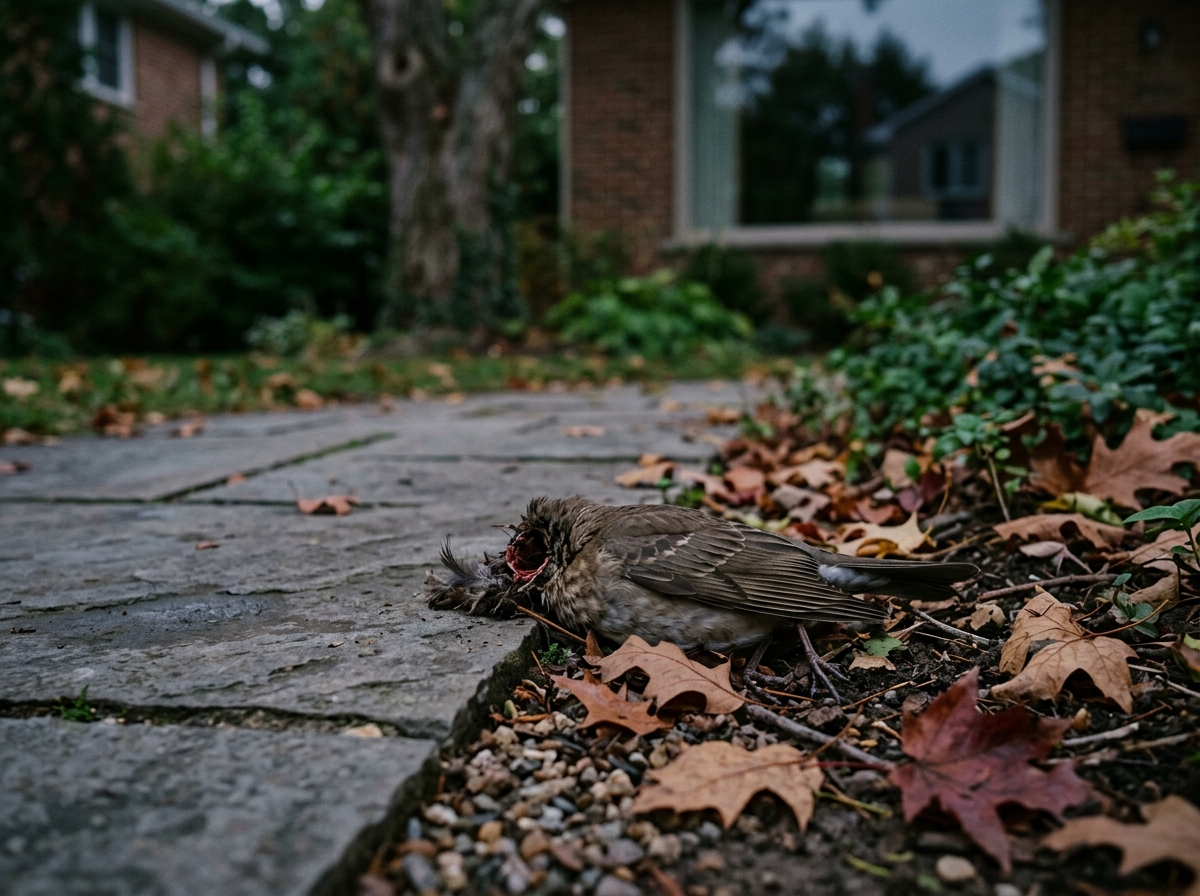
If you just found a dead bird hanging upside down and you're trying to figure out what it means, especially the dead bird mccafferty meaning, here's the short version: it could mean several things depending on your belief system, but there's also a very good chance a predator, a cat, or even the wind is responsible for the position. Before you decide it's a cosmic warning, it helps to know both sides of this so you can actually make sense of what you're looking at.
Dead Bird Hanging Upside Down Meaning: Spiritual and Practical Causes

Marcus Reeves
23 Mar 2026
What people usually mean when they talk about this
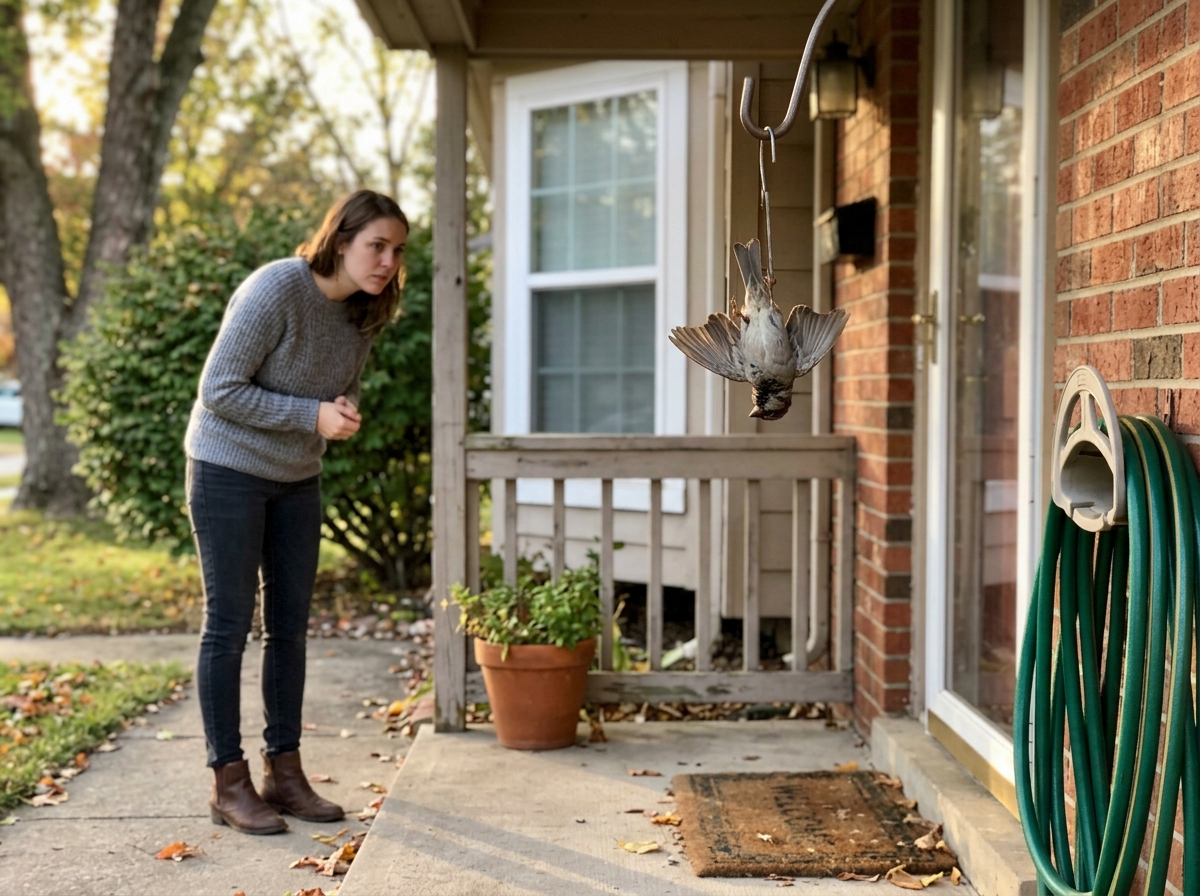
Most people searching for this are standing outside their door, in their yard, or near a window, looking at something unsettling. The upside-down position is what makes it feel significant. A dead bird on the ground reads as natural. A dead bird hanging inverted reads as a message, a warning, or something placed deliberately. That feeling is real and worth paying attention to, even if the explanation turns out to be mundane.
In popular spirituality, the most common interpretation is that a dead bird hanging upside down signals disruption, specifically a disruption of energy, warning, or transition. The upside-down orientation adds a layer of inversion to the already weighty symbolism of death. Where a dead bird on its own is often read as transformation or the end of a chapter (more on that in the broader dead bird meaning discussion), the inverted position intensifies that reading into something more urgent. Think of it as the symbolism being underlined.
Spiritual interpretations vs. cultural folklore (and why they don't always agree)
There is no single, universal spiritual meaning for a dead bird hanging upside down, and anyone who tells you otherwise is simplifying things dramatically. Here's how different frameworks actually treat it.
Western folklore and omen traditions
In Western European folk traditions, birds have been used for omen-reading for centuries, a practice historically called ornithomancy. The behavior, appearance, and positioning of birds were all considered meaningful. A dead bird near a home was generally treated as a warning of misfortune or coming change, and an abnormal position (like being upside down, or hung) would have amplified that reading. This is where a lot of modern "bad omen" interpretations come from.
Contemporary spirituality and new age frameworks
Modern spiritual communities tend to be more nuanced. Rather than pure bad luck, many popular spiritual sources frame a dead bird as a symbol of transformation and new beginnings, using the metaphor of death as change rather than loss. In this reading, the bird's death represents the end of one phase and the opening of another. The upside-down position might be read as a signal that something in your life needs to be flipped or reconsidered, a prompt to look at a situation from a different angle.
Indigenous and spirit messenger traditions
Various Indigenous and Native traditions across North America treat birds as spirit messengers, intermediaries between the living world and the spirit world. In these frameworks, encountering a dead bird is not automatically negative. It may signal that a message is being delivered, that an ancestor is nearby, or that you need to pay closer attention to something in your life. The specific meaning often depends on the bird species and context, not just the position. It's worth noting that these traditions are diverse and not a monolith, so applying a single generic Indigenous interpretation is itself a form of cultural flattening.
Why the interpretations differ so much
The gap between these frameworks mostly comes down to how each culture views death itself. Traditions that see death as bad news will read a dead bird as an unfavorable sign. Traditions that view death as transformation or transition will read it as a prompt for change. Neither is objectively correct, which means your personal framework matters more here than any universal rulebook.
Practical, non-supernatural reasons for the upside-down position
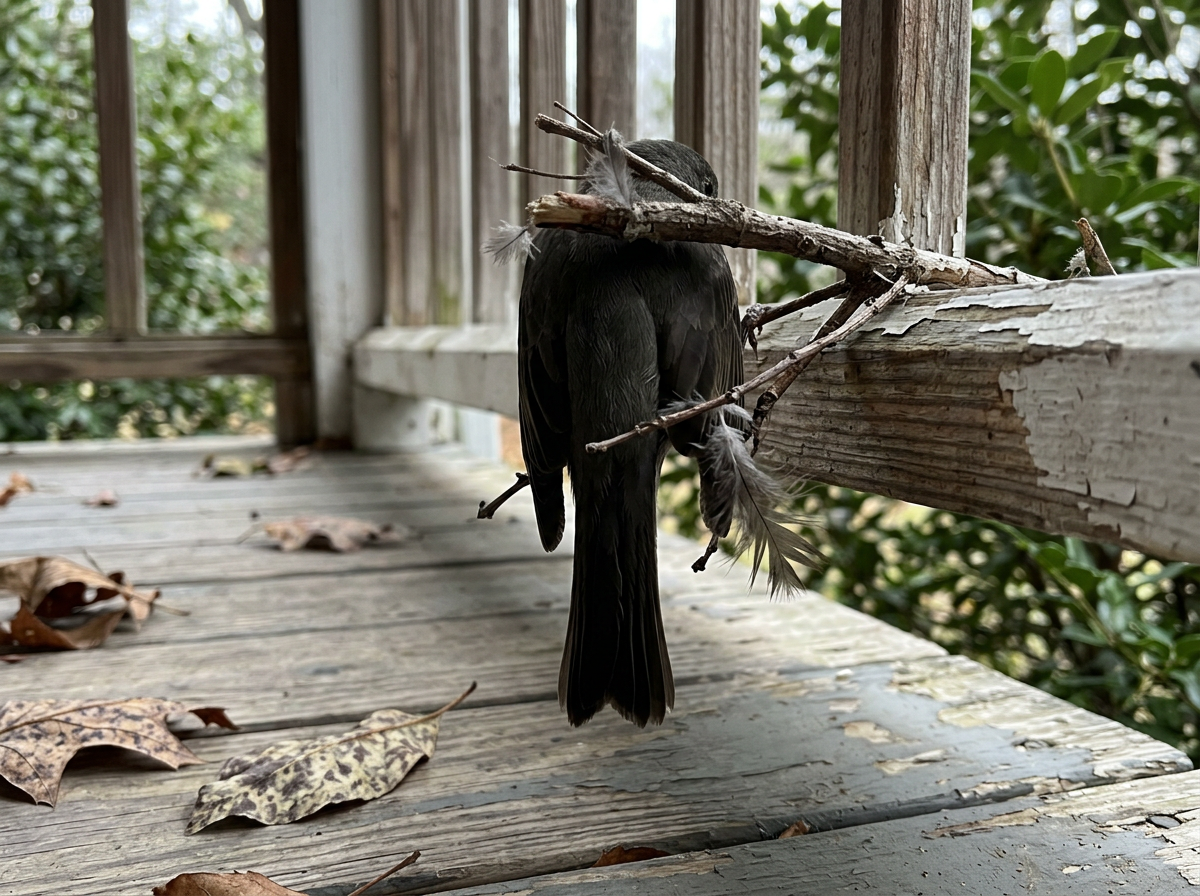
Before you land on any symbolic interpretation, it's genuinely worth considering how the bird got into that position. The upside-down placement almost always has a physical explanation.
- Predator behavior: Cats, hawks, and other predators sometimes leave kills in unusual positions. A cat that catches a bird on a fence or in a tree may leave it lodged there, and gravity can flip the carcass depending on how it's wedged.
- Scavenger repositioning: Scavengers like crows or ravens will move and reposition a carcass while feeding. What you find may not be in the position the bird died in.
- Wind and environmental factors: A dead bird caught on a branch, wire, or surface can be repositioned by wind or rain over hours or days. Rigor mortis and decomposition affect how the body settles.
- Muscle relaxation at death: Birds sometimes die while perched and then release their grip, which can leave them dangling by a foot or wing if they're caught on something, creating an upside-down appearance.
- Human placement (intentional or careless): Someone may have placed the bird there deliberately as a prank, as a warning (more common in rural or agricultural contexts where predator deterrence is practiced), or simply moved it not knowing what else to do.
- Entanglement: Loose netting, wire, string, or fishing line can catch birds mid-flight. A bird that dies while entangled may hang in an inverted position.
The point here is that the position itself is not necessarily intentional or meaningful in a physical sense. It can look deliberate when it isn't. If you're going to assign meaning, do it after you've ruled out the straightforward explanations.
How to actually interpret this in context
Context does more interpretive work than the general symbolism does. Here are the factors that actually matter when you're trying to figure out what, if anything, this sighting means for you specifically.
Where the bird is located
| Location | Common practical explanation | Common symbolic reading |
|---|---|---|
| Front doorway or entry | Cat or predator left it; deliberate human placement | Warning or message directed at the household |
| Window or window ledge | Bird struck the window and got caught; entanglement | Blocked communication or transition signal |
| Backyard or open yard | Cat, scavenger, or environmental repositioning | General transformation or change energy |
| Roof or high structure | Predator drop; hawk kill | Less commonly assigned specific meaning |
| Street or sidewalk | Vehicle strike, then repositioned by scavengers | Rarely interpreted symbolically; most often mundane |
| Near a fence or wire | Entanglement, electrocution, or predator activity | Boundary or threshold symbolism in some traditions |
Timing and what's happening in your life
Symbolism lands harder when it mirrors something already in motion. If you're in the middle of a big decision, a transition, or a period of uncertainty, you're more likely to assign weight to an unusual sighting, and honestly, that's not irrational. Pattern recognition is how humans make sense of the world. But be honest with yourself: are you reading meaning into this because it genuinely feels connected, or because you're anxious and looking for a sign? Both are valid human responses, but they lead you to different conclusions.
Whether there are multiple signs
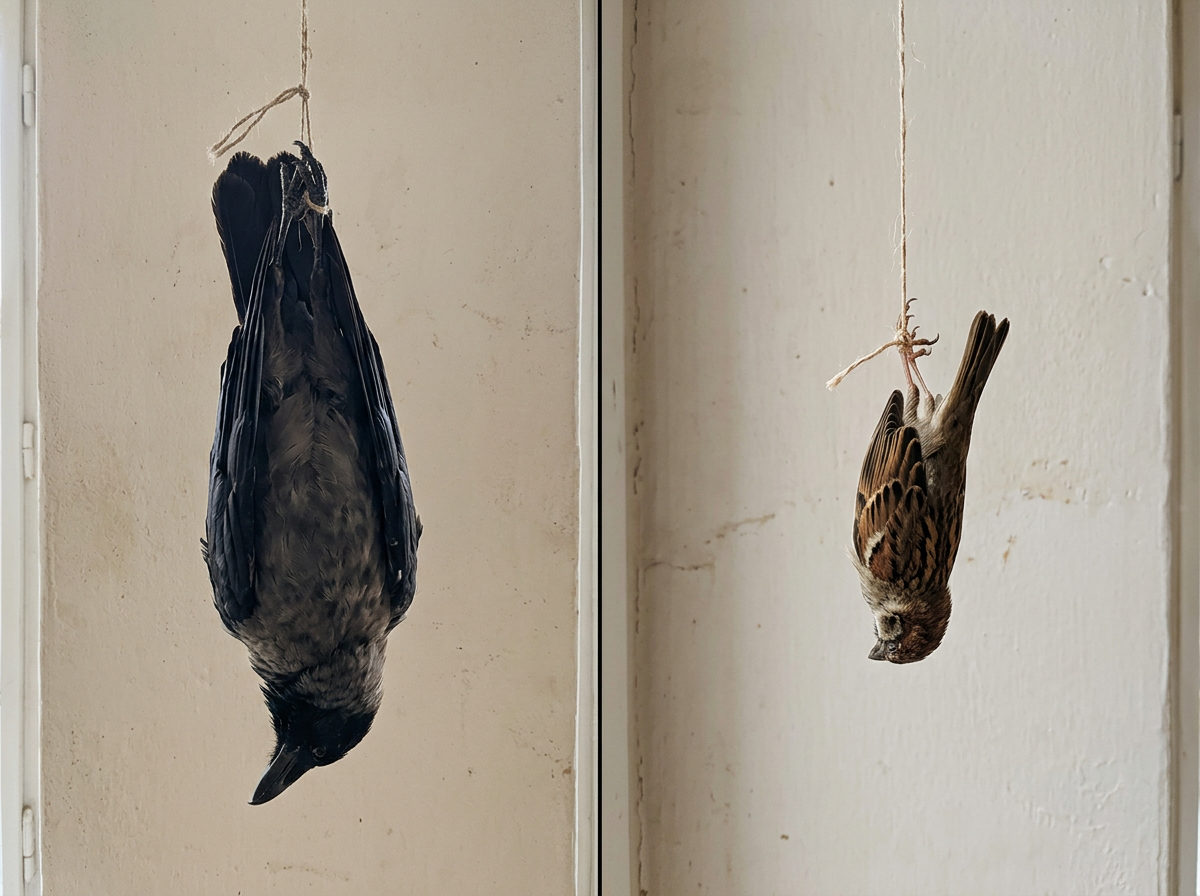
One dead bird, even in a strange position, is rarely enough context on its own. If you've been noticing a cluster of unusual bird-related occurrences, like birds repeatedly striking the same window, recurring appearances of a specific species, or other events that feel connected, that accumulation might carry more interpretive weight than a single sighting. Related symbolism like the carrion bird meaning or what a headless bird represents can add layers if the situation is more complex than a simple sighting.
The specific bird species
The species matters enormously in symbolic traditions. A dead crow hanging upside down carries different cultural weight than a dead sparrow or a dead pigeon. Ravens and crows are already heavily loaded symbols in Western and Indigenous traditions. Doves carry peace and spirit imagery. Owls are linked to death and wisdom in many cultures. If you can identify the bird, that species-specific symbolism is worth factoring in before you apply a generic reading.
What to do right now: safety, cleanup, and when to make a call
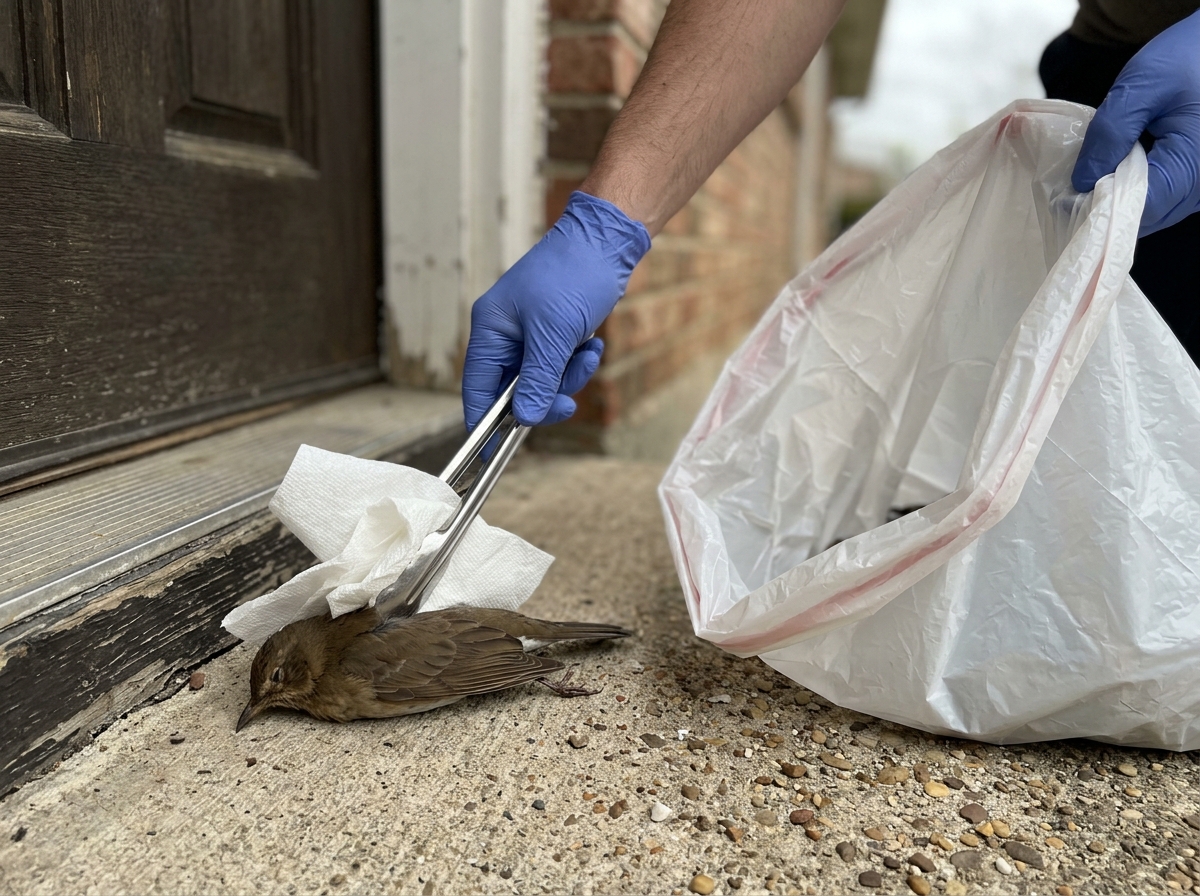
Whatever you decide the sighting means symbolically, there are practical steps you should take regardless. Dead birds can carry bacteria, parasites, and in some cases diseases like avian influenza or West Nile virus. Handle this properly.
- Do not touch the bird with your bare hands. Full stop. Use gloves (disposable nitrile or latex) or a plastic bag turned inside-out to handle the carcass.
- Keep children and pets away from the area until it's cleaned up.
- Double-bag the bird in sealed plastic bags before disposing of it in an outdoor trash bin. Check your local municipal rules, because some areas have specific guidelines for dead animal disposal.
- Disinfect the area where the bird was found, especially if it was near a food prep area, a child's play space, or a pet's eating area. A diluted bleach solution (1 part bleach to 9 parts water) works for hard surfaces.
- Wash your hands thoroughly with soap and water after cleanup, even if you wore gloves.
- If the bird appears very recently placed, is hanging in a clearly deliberate and arranged manner (tied, for example), or if you find multiple dead birds in the same area, contact your local animal control or wildlife agency. This could indicate a disease event, an illegal poisoning, or something that warrants investigation.
- If you suspect the bird died from a window strike and it's a protected species, some regions require reporting to wildlife authorities. Migratory birds in the United States, for example, are protected under federal law.
- If you're in a region with active avian flu concerns, your local health department may want to know about unusual bird deaths, especially if you find more than one.
One more thing: if the bird appears to have been deliberately placed at your door or property in a way that feels threatening or like harassment from a person, that is a matter for local law enforcement, not animal control. Trust your read on the situation.
Don't let the moment run away with you
Bird symbolism is genuinely rich, and the language around it runs deep through literature, slang, and culture. But that richness can also make it easy to over-read a single moment. A few phrases worth keeping in mind as a reality check:
- "A bird in the hand" reminds us that concrete reality is worth more than speculation. What you physically have in front of you is a dead bird. The meaning is what you bring to it.
- "Reading the entrails" is an old idiom for trying to predict the future from ambiguous signs. It usually implies a stretch. Not every sign is a clear message.
- "Omen" in everyday language has become almost synonymous with foreboding, but historically, omens were neutral observations that required interpretation. They were prompts for reflection, not sentences.
- "Harbinger" is another bird-adjacent term people reach for. A harbinger is something that signals what's coming, but the signal still needs a reader and a context to mean anything.
The broader point is this: bird-related symbolism in language and culture is designed to help us think about change, transition, warning, and communication. A dead bird hanging upside down sits squarely in that symbolic space. But the meaning you take from it should be proportional to the rest of your context, not inflated by the strangeness of the image alone. Handle the practical side first, then sit with whatever the moment brings up for you. That order of operations tends to produce clearer thinking.
FAQ
How can I tell if the bird’s upside-down position was likely caused by animals or weather?
Take a close look from a safe distance. If it looks freshly dead, stiff, or recently dried out, note the timing. Wind-driven repositioning and predator scavenging can produce unusual angles, so a “today” versus “several days ago” timeline helps you decide whether the upside-down placement is likely to be accidental.
What’s the safest way to clean up a dead bird hanging upside down?
If you smell decay or the bird is leaking bodily fluids, assume higher contamination risk. Use thick gloves, avoid handling if you can, and place the carcass in a sealed bag. Do not hose the area directly, instead disinfect after removal and keep pets and children away until it is cleaned.
What should I do if the bird is in a hard-to-reach spot or near power lines?
Yes. If the bird is stuck in a place you cannot access safely (height, ledge, balcony, busy street), contact your local sanitation or animal waste services rather than climbing. If it is caught in a snag near power lines, call the utility, because handling around electrical infrastructure is dangerous.
How do I avoid over-interpreting an accidental “deliberate-looking” hang?
For many people, the biggest mistake is treating the position as proof of intent. Even “hung” carcasses can be caused by cats, birds of prey, or entanglement in fencing or tree branches. A deliberate-feeling placement is a factor, but it is not definitive evidence of a person’s action.
If it seems like harassment, what information should I collect before reporting it?
If you suspect someone is deliberately leaving animals to intimidate you, prioritize documentation. Write down the date, time, exact location, and take photos from a distance where you are safe. If there are prior incidents, mention them when you report it so they can assess pattern or harassment.
Does the bird species change the meaning, and what details should I record?
Species identification is often the most useful “extra step” for symbolic interpretations. Take a photo or note size, color, beak shape, and whether it was crow-like, pigeon-like, owl-like, etc. Without species, most symbolism becomes generic and can push you toward confirmation bias.
What if I notice more than one dead bird or repeated bird activity around my home?
If multiple birds keep appearing, the most practical first question is environmental. Check for window strikes, accessible roof or yard hazards, open trash, or feeders that may attract predators or increase bird traffic. If it is a recurring pattern, consider adjusting lighting and reducing attractants before assuming a personal “sign.”
How can I balance spiritual meaning with practical evidence?
Start with a “two-track” approach. Track facts (when, where, species, weather, access by animals) separately from feelings. Then ask whether your current life event already matches the themes you are assigning, like transition or disruption. This keeps the symbolic interpretation proportional.
How soon should I remove the dead bird, and what if I can’t do it right away?
If the bird is causing ongoing contamination concerns or attracts more animals, remove it promptly. If you cannot remove it immediately, block access to the area and contact local services. Lingering carcasses increase scavenger visits and cleanup becomes harder the longer it sits.
What if this sighting triggers anxiety, grief, or fear?
If you are in a grief state, religious practice, or trauma triggers, symbolic readings can intensify distress. Consider choosing a “lower intensity” interpretation (change, attention, or reflection) and avoid conclusions that imply blame or imminent harm. If the event is destabilizing, grounding practices and professional support can help.
Do I need to report it to anyone, and who do I contact?
Yes. In many areas, dead wildlife disposal and reporting rules differ by municipality. If you are unsure, search your city or county guidance for “dead bird pickup” or call non-emergency services for direction, especially if you suspect disease or multiple carcasses.
Next Article
Found Dead Bird Without Head Meaning and What to Do
Find a headless dead bird: meanings people suggest plus realistic causes, safe cleanup, and who to contact.