
When someone says 'carrion bird,' they usually mean one of two things: a literal bird that eats dead animals (think vultures, crows, condors), or a figurative insult for someone who profits from others' suffering. The good news is that context makes it pretty easy to tell which meaning is in play. If the surrounding text is about biology, nature, or a specific bird species, it's literal. If someone is describing a scheming person or a corrupt institution, it's a metaphor. This guide walks through both meanings clearly so you're never left guessing.
Carrion Bird Meaning: Literal Definition and Figurative Use

Marcus Reeves
23 Mar 2026
What 'Carrion' Actually Means
Before you can fully unpack 'carrion bird,' you need to know what 'carrion' means on its own. Merriam-Webster defines it simply as 'dead and decaying flesh.' Britannica narrows it to 'the flesh of dead animals,' and Cambridge's example sentences treat it as dead animals specifically. So carrion isn't trash, it isn't scraps, and it isn't a general term for waste. It means the rotting flesh of a dead animal. That specificity matters, because when you attach it to 'bird,' you're describing a creature whose diet centers on exactly that.
Ecologically, carrion begins to decay the moment an animal dies. From there, bacteria and insects move in quickly, making the window for a carrion-eating bird to find and consume the carcass a time-sensitive one. That urgency is baked into how these birds behave, which is why they've developed such distinctive adaptations and such a strong cultural reputation.
Which Birds Actually Count as Carrion Birds
This is one of the most common points of confusion: 'carrion bird' is not a formal scientific classification. It's a descriptive label, not a taxonomic rank. Any bird species known for regularly eating carrion can earn the label, and quite a few do. Here are the ones you'll encounter most often.
Vultures
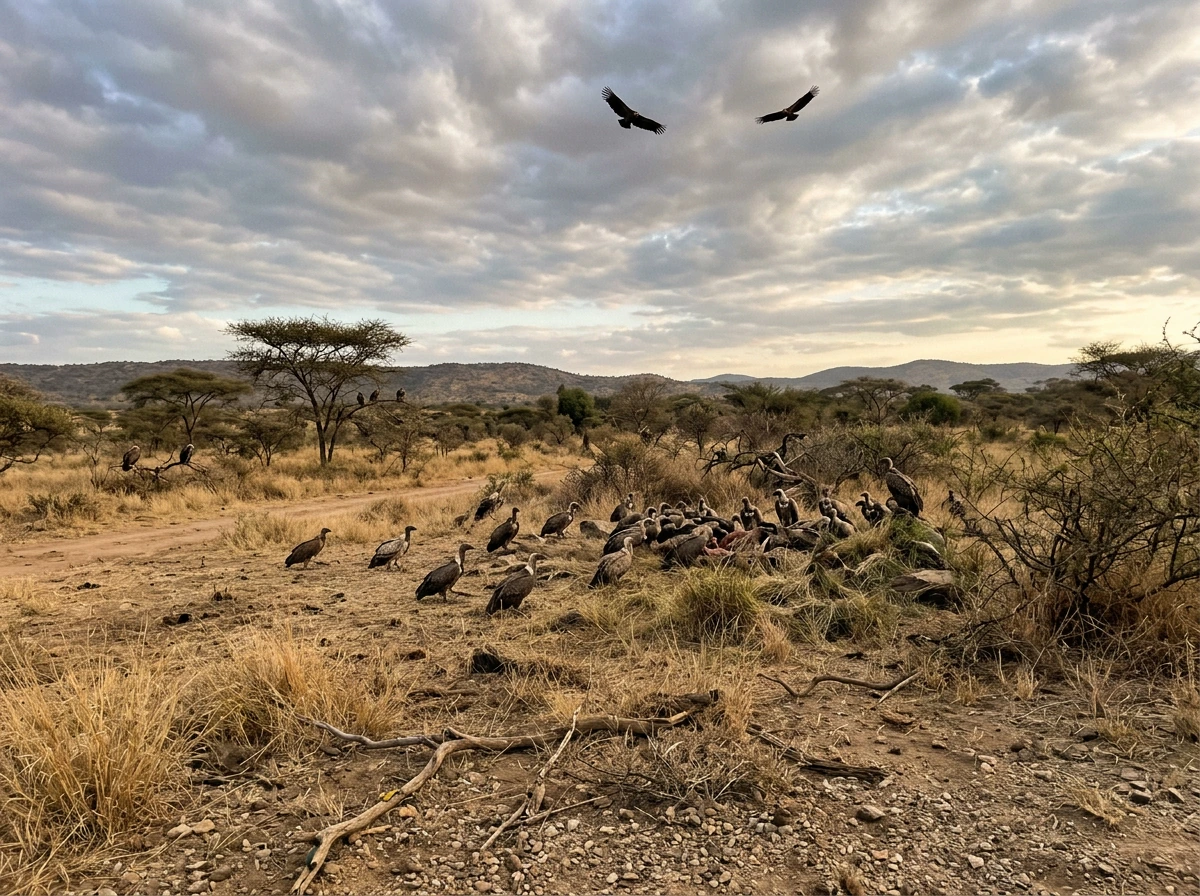
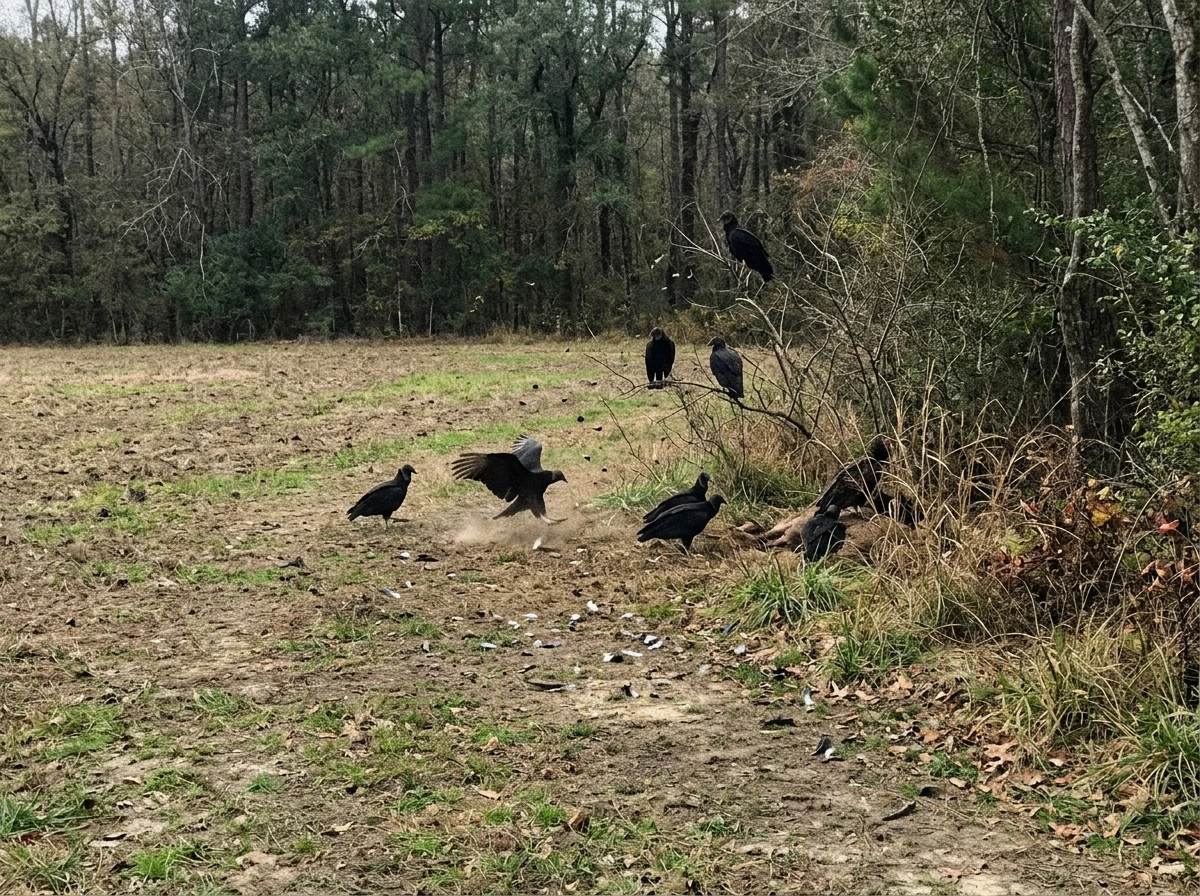
Vultures are the flagship carrion birds. The turkey vulture, for instance, feeds almost exclusively on carrion and is often the first bird to locate a fresh carcass. Turkey vultures can even track carrion by scent, specifically by detecting ethyl mercaptan, a compound produced by decaying flesh. That's unusual for birds, which generally have a poor sense of smell. Old World and New World vultures fill this niche across multiple continents, and they're the bird most people picture when they hear the phrase 'carrion bird.'
Condors
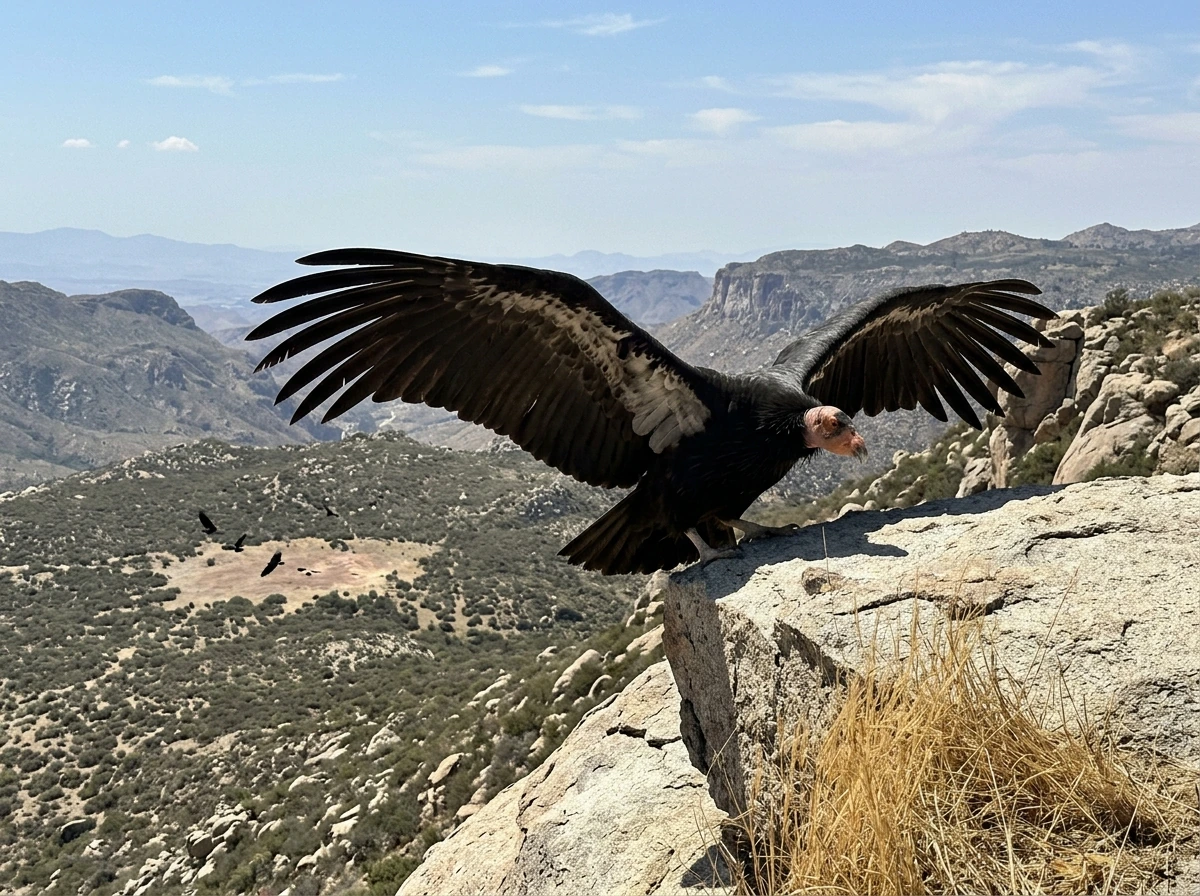
The California condor feeds exclusively on carrion, with a preference for large carcasses like those of deer, cattle, and sheep. They'll also take smaller animals when large carcasses aren't available. Condors are essentially vultures on a grand scale, and they carry the same 'carrion bird' label in both scientific and everyday writing.
Carrion Crow
The carrion crow (Corvus corone) is a European species that has 'carrion' baked right into its common name. The British Trust for Ornithology and Dictionary.com both treat 'Carrion Crow' as the official common name for this species. It's a bird that eats carrion regularly, and its name says exactly that. This is where things get a little confusing: when you see 'carrion bird' in older British or European texts, they may specifically mean this crow, not a vulture.
Other Opportunistic Scavengers
Ravens, eagles, and some hawks will eat carrion when the opportunity arises, even if they also hunt live prey. These are called facultative scavengers, meaning they eat carrion opportunistically rather than exclusively. You might see them described loosely as 'carrion birds' in casual conversation, but more precise writers would call them scavengers or note their mixed diet.
Why Carrion Birds Matter (Their Ecological Role)
Carrion birds do something genuinely important that doesn't get nearly enough credit. By rapidly consuming carcasses, they help prevent dangerous pathogens from spreading into soil, water, and surrounding animal populations. National Geographic Education describes this as a disease-control ecosystem service: scavengers process carcasses before rot and bacterial overgrowth become serious environmental hazards.
Vultures are especially well-suited to this role because of their biology. Their gastric pH is extremely low, acidic enough to kill pathogens that would be lethal to most other animals. A systematic review published in the Journal of Wildlife Diseases confirmed that vultures and similar carrion eaters have digestive adaptations specifically suited to neutralizing the bacteria found in decaying flesh. WWF notes that this stomach acidity essentially sterilizes the material passing through them. Turkey vultures can even projectile vomit their stomach acid when threatened, which Live Science describes as being roughly as corrosive as battery acid.
One important misconception worth clearing up: vultures do not spread disease. Live Science explicitly identifies this as the 'biggest misconception' about them. In reality, the opposite is true. They eliminate the conditions that allow disease to spread.
There's also a fragility to this system. National Geographic Education notes that vultures in South Asia were killed in large numbers after consuming carcasses of livestock treated with diclofenac, an anti-inflammatory drug. When carrion bird populations crash, carcasses accumulate, and disease risk rises. These birds are genuinely load-bearing members of healthy ecosystems.
The Figurative Meaning: When 'Carrion Bird' Is a Metaphor

In writing, literature, and everyday speech, 'carrion bird' steps out of biology and becomes a sharp insult or vivid metaphor. The figurative meaning hinges on what carrion birds actually do: they wait for something to die, then move in to feed. Applied to a person or institution, it implies passive predation, profiting from collapse, or circling someone's misfortune like it's a meal.
A poetic line from The Rhymes of David uses 'like a foul carrion bird' alongside imagery of spreading stench, making it a metaphor for someone who feeds on gossip or others' pain. That's the figurative pattern: the carrion bird as a symbol of moral rot, opportunism, or parasitic behavior. It's not subtle, and it's not meant to be.
Older literature uses the phrase in a more mythological register. In Cicero's Tusculan Disputations, 'Jove's carrion bird' refers to the eagle that torments Prometheus, feeding on his liver daily. Here the carrion bird is both literal (a feeding creature) and symbolic (an agent of punishment). This dual use shows up repeatedly in classical and Renaissance-era writing.
In modern creative writing forums and fiction, 'carrion bird' tends to appear in fantasy or dark literary contexts. A creature described as a 'carrion bird' in a novel almost always signals danger, death nearby, or a character who preys on the weak. When someone in everyday conversation calls a person a 'carrion bird,' they usually mean that person swoops in after disasters, legal battles, financial collapses, or personal tragedies, to take advantage.
Carrion Bird vs. Scavenger vs. Vulture: Clearing Up the Overlap
These three terms get used interchangeably in casual speech, but they don't mean exactly the same thing. Here's a quick breakdown.
| Term | Scope | Applies To | Formal Classification? |
|---|---|---|---|
| Carrion bird | Birds that eat carrion (dead animal flesh) | Vultures, condors, carrion crows, ravens (loosely) | No — descriptive label only |
| Scavenger | Any animal feeding on carrion, dead plants, or refuse | Birds, mammals, insects, fish | No — behavioral category |
| Vulture | Specific bird families (New World/Old World vultures) | Exclusively carrion-eating bird species | Yes — common name for specific species groups |
Merriam-Webster defines 'scavenger' as 'an organism that typically feeds on refuse or carrion,' which makes it broader than 'carrion bird' because it includes animals that eat non-animal waste too. Cambridge defines it as an animal that feeds on dead animals it has not killed itself, which is closer to 'carrion bird' territory but still covers non-bird animals. 'Vulture,' meanwhile, refers to specific bird species rather than a behavioral category. A crow eating roadkill is a carrion bird and a scavenger, but it's not a vulture.
The inconsistency you'll notice in everyday usage comes from people treating 'carrion bird,' 'scavenger,' and 'vulture' as synonyms when they're not quite. In formal writing or scientific contexts, the distinctions matter. In casual conversation or metaphor, people usually just mean 'something that feeds on death,' and any of the three words might appear.
How to Read the Phrase in Context
The fastest way to figure out which meaning is intended is to look at what's around the phrase. Here are some real examples and what they signal.
- "The carrion bird circled the dying elk" — Literal. This is describing bird behavior in a natural or fictional wilderness setting. Look for concrete, physical imagery, animal names, or nature-writing cues.
- "He was nothing but a carrion bird, waiting for the company to collapse so he could buy it cheap" — Figurative. The subject is a person, and the behavior described is opportunistic profiting from someone else's loss.
- "Jove's carrion bird returned each dawn to resume its torment" — Literary/mythological. This references the Prometheus myth and uses a literal bird in an allegorical role. Context is classical or epic.
- "Like a foul carrion bird, spreading the stench wherever she went" — Figurative and moral. The simile structure ('like a...') signals metaphor. The phrase describes character, not species.
- "Carrion crows have been spotted near the lambing fields" — Literal and species-specific. 'Carrion crow' here is the common name for Corvus corone, a real bird species. No metaphor intended.
A reliable rule: if the sentence includes a physical location, an animal, or biological behavior, it's literal. If it's describing a person's character or actions, it's figurative. The phrase almost never sits ambiguously between the two. Writers who use it as a metaphor generally lean into it hard, with moral language and comparison structures. Writers using it literally tend to keep it grounded in place and behavior.
It's also worth knowing that 'carrion bird' shows up in texts about death, loss, or decline more broadly, even when it's not a direct metaphor. If you're also wondering about the dead bird McCafferty meaning, look for how the phrase is being used to signal decay, loss, or predation rather than biology. If you are wondering about the dead bird hanging upside down meaning, the context is what determines whether it is being used literally or symbolically dead bird McCafferty meaning. If you're reading a poem about war, grief, or moral collapse and 'carrion bird' appears, the author may be using it symbolically without specifically calling any character a carrion bird. In that case, the bird is doing atmospheric work, signaling death or predation nearby rather than naming a specific person or creature. For more on how dead birds function as symbols in literature and everyday life, the related article on found dead bird without head meaning goes deeper into that territory. This is also where the dead bird meaning idea shows up, because the phrase often gets used to signal decay, loss, or predation in a symbolic way dead birds function as symbols.
Quick Reference: What You Need to Know
If you just need the core answer fast, here it is in plain terms you can use right away.
- Carrion = dead and decaying animal flesh. Carrion bird = a bird that eats it.
- The most common carrion birds are vultures (including turkey vultures), condors, and the carrion crow (Corvus corone). Ravens and eagles sometimes qualify too.
- 'Carrion bird' is a descriptive label, not a scientific classification. Any bird that regularly eats carrion can wear the label.
- Figuratively, calling someone a 'carrion bird' means they feed off others' misfortune, death, or collapse. It's a pointed insult about opportunism.
- To spot the intended meaning: literal uses involve animals and physical settings; figurative uses describe people, institutions, or moral situations.
- Scavenger is broader (covers all carrion-eating animals plus refuse); vulture is narrower (specific bird families). Carrion bird sits in the middle, birds only, carrion specifically.
- Vultures don't spread disease. They prevent it. Their stomach acid kills pathogens that would otherwise multiply in unprocessed carcasses.
- If you see 'carrion bird' in a simile ('like a carrion bird') or applied to a person, it's metaphorical. If you see it in a scene with wildlife or a field setting, take it at face value.
FAQ
Is “carrion bird” always a metaphor?
Most of the time, yes, it is a literal label for birds that regularly feed on dead animals, like vultures and some crows or condors. The safest way to confirm is to check whether the sentence names a species, a habitat, or a feeding behavior (for example, locating carcasses by scent). If it does, treat it as literal.
Does “carrion bird” mean a bird that eats any kind of trash?
It is not. “Carrion” refers specifically to dead and decaying flesh, so “carrion bird” is about feeding on that, not general trash or “waste.” If the surrounding text mentions garbage, sewage, or non-animal refuse, the author may be using “scavenger” or “bird of prey” instead, or they are speaking imprecisely.
When someone says “carrion bird” in older texts, do they always mean vultures?
Yes, but usually in older British or European contexts. The term “Carrion Crow” can be used as the common name of a specific species, so if you see “carrion bird” near “crow,” regional place names, or older natural history writing, it may point to that crow rather than vultures.
Would an eagle that sometimes eats roadkill count as a “carrion bird”?
Not necessarily. Some raptors are facultative scavengers, meaning they eat carrion when it is available but also hunt live prey. If you are trying to be precise, “scavenger” or “facultative scavenger” fits better than “carrion bird,” which implies carrion as a central diet.
How can I tell whether a figurative “carrion bird” insult is about opportunism or just being grim?
In many cases, yes, but the metaphor can target different “profit from collapse” behaviors. Watch for phrasing like “feeds on,” “circles,” “moves in after,” or references to lawsuits, scandals, or tragedies. Those cues usually indicate opportunism rather than just “darkness” or “death imagery.”
Is it okay to use “carrion bird” as a synonym for “scavenger” in formal writing?
A common writing mistake is treating “carrion bird” as a neutral synonym for “scavenger” or “vulture.” It is narrower in meaning (and often sharper in tone) because it points to birds and specifically to feeding on decaying flesh. If you mean “animal that scavenges,” use “scavenger,” and if you mean a species, name it.
What’s a good way to use “carrion bird” in writing without confusing readers?
Yes, and it helps avoid confusion if you define the sense explicitly. If your audience might read it biologically, add one concrete anchor term such as “carcass,” “decay,” or “carion feeding,” then later you can clarify the metaphor (for example, “after disasters”) so readers do not lock into the literal picture.
Is calling someone a “carrion bird” likely to be seen as harmful or inappropriate?
If the figurative version targets a real person or group, it can come off as harassment or defamation depending on context, because it implies parasitic wrongdoing and profiteering from harm. For safer communication, consider softer alternatives like “opportunist” or “predator,” or keep it clearly fictional in tone.
Can “carrion bird” be symbolic even if it is not used as a direct insult?
Yes, “carrion bird” can function as atmosphere even when no person is being insulted. If it appears in passages about war, grief, moral decline, or death nearby, it may be signaling predation and decay symbolically. In that case, the “bird” is doing literary symbolism rather than naming a character.
Is there a simpler term than “carrion bird” for everyday conversation?
Use “carrion bird” sparingly in everyday speech if you want to be understood quickly, because many people associate it most strongly with vultures. If you want a broader and clearer meaning, “scavenger” usually lands better, and “vulture” is clearer still for many readers.
Next Article
Eurasian Bird Meaning: Literal, Symbolic, and How to Tell
Decode Eurasian bird meaning with a checklist to spot literal geography vs symbolism and identify likely species from co