In slang, 'bird' most commonly refers to a person, and which person depends heavily on where you are in the world and who's talking. In British and Australian English, 'bird' is a casual, sometimes affectionate, sometimes dismissive word for a woman or girl. In American English, 'bird' on its own rarely carries that meaning, but it shows up in fixed phrases, most notably 'flip the bird,' which has nothing to do with people at all and everything to do with a certain obscene hand gesture. If you've run across 'bird' in a text, a song lyric, or a conversation and you're not sure which sense is meant, the context almost always tells you within a word or two.
What Is a Bird in Slang? Meanings, Phrases, Examples

Marcus Reeves
19 Apr 2026
What 'bird' actually means in slang
The core slang sense of 'bird' as a word for a woman or girl is firmly rooted in British English and has been in common use since at least the mid-20th century. Merriam-Webster has an entry for 'dolly bird,' which it defines as 'a pretty young woman,' and Collins English Dictionary records 'dollybird' as 'an attractive young woman.' Both entries confirm that 'bird' is the loaded half of that compound: it's the part signaling 'woman' in the casual, colloquial register.
Outside of the woman-referring sense, 'bird' in slang can also just mean a person in a vague, slightly dismissive way, as in 'a strange bird' or 'an odd bird,' which shades into idiom territory (more on that distinction below). In drug slang, particularly in some American urban dialects, 'bird' or 'bird' in the context of a deal can refer to a kilogram of cocaine, though this is highly context-specific and specialized. The meaning you'll encounter most often in everyday speech, social media, or casual UK-influenced media is still the woman/girl sense or the gesture phrase.
Online, you may also see 'birb,' which Dictionary.com documents as an internet slang misspelling of 'bird' used in the DoggoLingo meme tradition. 'Birb' is deliberately cute and playful, used to describe actual birds in photos or videos. It has nothing to do with the person-referring slang sense. If you see 'birb,' you're in meme territory, not British casual speech.
Common slang phrases using 'bird' and what each one means
Most of the confusion around 'bird' in slang comes from the fact that the word appears in several very different phrases, each with its own meaning. Here are the ones people actually ask about most:
| Phrase | Meaning | Region / Register |
|---|---|---|
| flip the bird / give someone the bird | To make the middle-finger obscene gesture at someone as an insult or expression of contempt | US English, widely understood globally |
| my bird / his bird | My girlfriend / his girlfriend | British and Australian slang |
| dolly bird | An attractive young woman (somewhat dated) | British English, mid-to-late 20th century |
| a strange bird / odd bird | A peculiar or eccentric person | General English, closer to idiom than slang |
| the bird (as in 'give someone the bird') | Dismissal or rejection, sometimes the gesture, sometimes being fired or booed off stage | British and US English, context-dependent |
| birb | A cute or funny bird (an actual feathered animal), used in internet memes | Internet/online slang, DoggoLingo style |
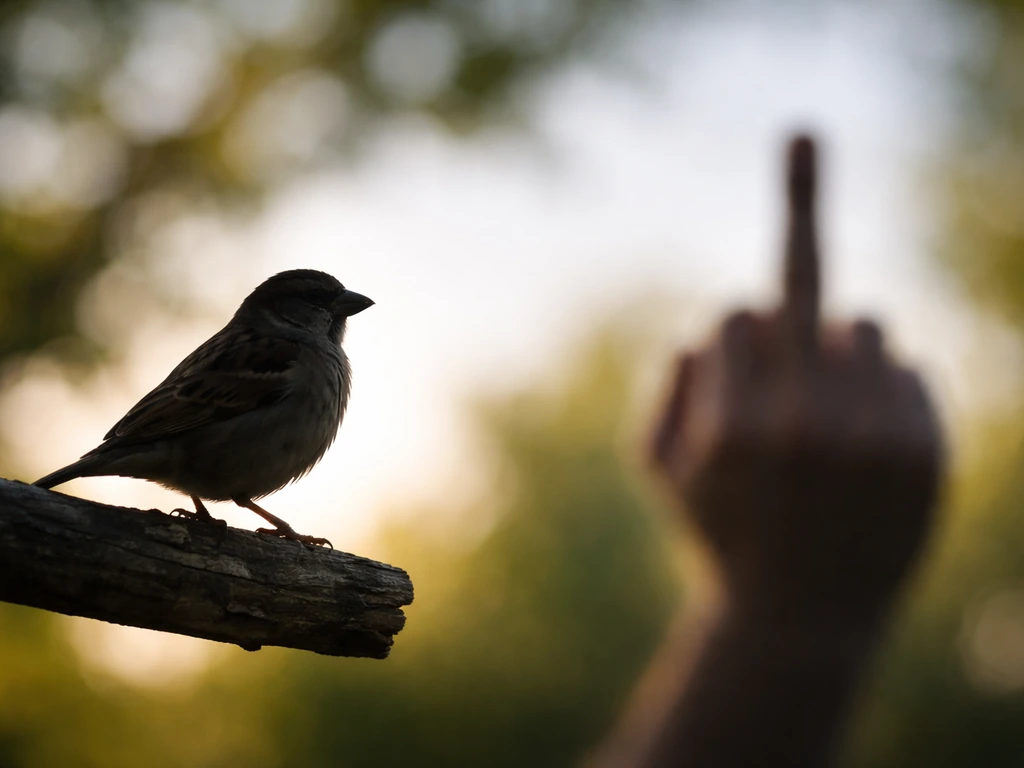
'Flip the bird' is probably the phrase that brings the most people to this topic. Cambridge Dictionary, Merriam-Webster, and UsingEnglish all document it as a fixed expression for making the middle-finger gesture. Ginger Software is direct about it: 'flip the bird' means extending the middle finger as a rude, crude insult. According to Atlas Obscura, this use of 'bird' for the gesture has historical roots going back to earlier expressions involving hissing and the term 'big bird,' making it one of the older slang senses of the word. The gesture and the phrase are so well established that 'bird' in this phrase is essentially fused to the meaning, you wouldn't swap it for another word.
How to tell which meaning is intended from context
Context clues do most of the work here. The key signals are: who is speaking, what country or dialect they're using, whether 'bird' is followed by a possessive pronoun, and whether it appears in a fixed phrase.
- If 'bird' follows a possessive pronoun (my bird, his bird, your bird), it almost certainly means girlfriend in British or Australian slang.
- If the sentence includes 'flip,' 'give,' or 'flipped,' and 'bird' comes right after, it's the middle-finger gesture, full stop.
- If 'bird' is preceded by 'dolly' or used to describe someone's appearance, it's the British slang for an attractive young woman.
- If someone describes a person as 'a funny bird' or 'a strange bird,' this is closer to a general idiom for an eccentric person than true slang.
- If you see 'birb' (with that specific spelling), you're in internet meme territory and the word refers to an actual bird, not a person.
- Surrounding emoji can help online: a hand or middle-finger emoji next to 'bird' usually confirms the gesture meaning; a heart or couple emoji points to the girlfriend sense.
Tone and relationship matter too. 'Bird' used for a woman can range from affectionate to condescending depending on who says it and how. A British man casually mentioning 'my bird' to his mates is being informal and affectionate. Someone calling a woman 'just some bird' in a dismissive tone is being reductive. The word itself is neutral in form; the attitude around it does the heavy lifting.
How 'bird' sounds in everyday speech vs. online and in writing
In everyday spoken conversation
In face-to-face or phone conversation, especially in British or Australian English, you'll hear 'bird' used naturally and without fanfare. Examples: 'He's been seeing some bird from his work' or 'My bird and I are going away this weekend.' In American English, you're more likely to hear 'flip the bird' in spoken use, usually in the context of road rage stories or recounting confrontations: 'He literally flipped the bird at the traffic cop.'
In texts, social media, and online writing
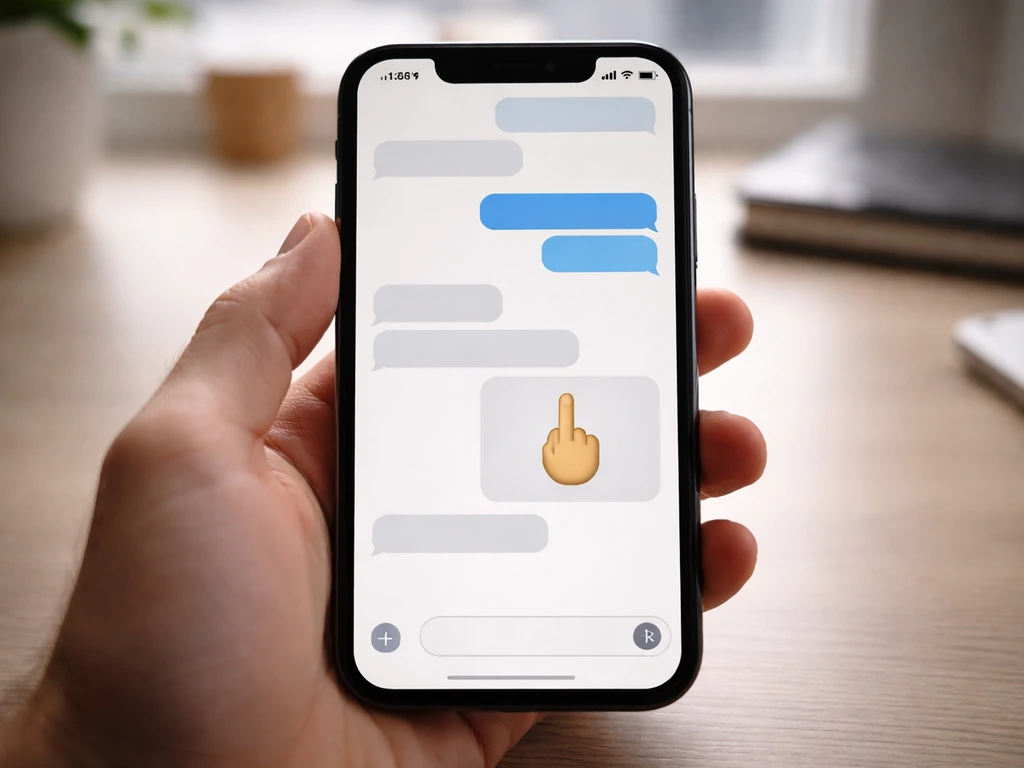
Online, 'flip the bird' appears regularly in commentary, tweets, and reaction posts. You might also see 'flipped him the bird' or 'gave her the bird' in written accounts of arguments or public incidents. The girlfriend sense of 'bird' also shows up in British social media: 'Can't come out, doing something with my bird.' And then there's 'birb,' which lives almost entirely in image captions, meme forums, and pet accounts, always referring to an actual feathered creature in a playful, exaggerated cute voice. The spelling alone is your signal.
Bird idioms vs. bird slang: don't mix them up
This is where readers often get tangled. 'Bird' appears in a lot of traditional English idioms that have nothing to do with slang. 'A bird in the hand is worth two in the bush,' 'the early bird gets the worm,' and 'a little bird told me' are all idioms with figurative meanings built around the idea of an actual bird. They're not slang. They don't refer to people colloquially, and they carry no attitude about gender, gesture, or social hierarchy.
Slang is different because it's register-marked: it signals informality, in-group familiarity, or attitude. When someone calls their girlfriend 'my bird,' they're not using a figure of speech, they're using a casual social label. When someone 'flips the bird,' the word 'bird' is slang for the gesture itself, a specific cultural shorthand. The test is simple: if you can replace 'bird' with 'woman' or 'middle-finger gesture' and the sentence still makes sense in context, it's slang. If 'bird' is part of a proverb-like saying with a deeper lesson, it's an idiom.
There's also a middle zone worth knowing about: phrases like 'a strange bird' or 'an old bird.' These started as idioms (comparing a person to an odd creature) but have become so embedded in casual speech that they now feel like slang. They don't carry the same sharpness as calling someone 'my bird' or 'flipping the bird,' so treat them as softly idiomatic rather than true slang. Related expressions like '<a data-article-id="A5F5A97C-12A0-4CD4-8D08-AE0DDE53254A">bird bath</a>' also have both literal and slang senses (a quick wash using a sink rather than a shower), which is another area where the literal and figurative meanings of bird-related words can diverge depending on context. If you meant the phrase “bird bath,” it can refer to the literal item or, in some slang-adjacent contexts, to a different meaning entirely, so check the context in the sentence. The phrase "a bird bath" can also show up with a different, unrelated meaning, so context matters a bird bath is for foul play meaning.
What to do when you see 'bird' in a sentence you don't understand
Here's a quick decision process you can run through in about ten seconds:
- Check the spelling first: 'birb' means internet cute-animal meme, not person slang.
- Look for a verb before it: 'flip,' 'give,' or 'flipped' before 'the bird' means the middle-finger gesture.
- Look for a possessive before it: 'my bird,' 'his bird,' 'your bird' almost always means girlfriend in a British or Australian context.
- Check if 'bird' is part of a well-known proverb or saying: if so, it's an idiom, not slang.
- Read the tone: dismissive and casual in a personal context usually signals the woman/person sense; confrontational context usually signals the gesture sense.
- Look at surrounding words and emoji for extra confirmation, especially online where visual cues reinforce meaning.
Once you've run through those steps, you'll have your answer almost every time. 'Bird' in slang has a small, manageable set of meanings, and the context makes it far less ambiguous in practice than it might look at first glance. The phrase 'what does bird mean in New York slang' or what it stands for in other regional dialects can add more layers, but the core meanings covered here will get you through the vast majority of real-world encounters with the word. If you also meant "bird strike," that phrase is different from “bird” slang and can mean something else depending on context what does bird strike mean slang. The phrase “what does bird stand for slang” is basically asking which slang sense applies in a given conversation. The phrase "what does a bird mean in slang" usually points to the girlfriend and gesture meanings, so context matters. Bird chest slang usually comes up in the context of body jokes or sexual slang, so the surrounding words and tone matter most for what it means in that specific conversation bird chest mean slang.
FAQ
If someone says “bird” by itself, how can I tell which meaning they mean?
Most of the time it means “a woman or girl” in casual British or Australian speech, but in American contexts the safest assumption is that it is part of a fixed phrase (especially “flip the bird”). If it is standing alone, check whether the sentence sounds like relationship talk (for example, “my ___”) rather than a general description.
Is “my bird” always affectionate, or can it be rude?
“My bird” tends to sound affectionate or partner-like in British English, while “some bird” often reads as dismissive or objectifying depending on the speaker’s tone. If you cannot tell who is speaking and their attitude, treat it as potentially loaded and avoid repeating it.
Can “flip the bird” be interpreted as a comment about a woman?
Yes. “Flip the bird” is essentially fused to the middle-finger gesture, so swapping “bird” for “woman” would break the meaning. If the sentence includes verbs like “gave,” “flipped,” or “showed” plus an insult or confrontation context, you are almost certainly dealing with the gesture meaning.
What are the fastest context clues to use when reading “bird” in chat or social posts?
If the conversation is about a relationship, “bird” is usually the girl/woman slang sense in the UK-Australia register. If the topic is a confrontation, traffic, or arguing, it will usually be the gesture phrase. A quick cue is whether “bird” is attached to a person (possessive or partner context) versus attached to an action (showing, giving, flipping).
Where do “a strange bird” and “an old bird” fit, slang or idiom?
It is generally safer to treat “a strange bird” and “an odd bird” as softer idioms that have become slang-like in everyday speech, not the same as calling someone “my bird.” They usually do not carry the same partner/romance or crude sharpness as the core slang labels.
How do I recognize “birb” and what does it usually mean?
“Birb” is meme spelling, commonly used to describe real birds in a cute, playful way. It is not the girlfriend slang term, and it is not related to the gesture. If the text includes photos, pet accounts, or intentionally goofy tone, “birb” is almost certainly the animal sense.
If I see “bird” near sexual or body-joke language, is it automatically the girlfriend meaning?
Be cautious with body-related slang lists. Even if the article mentions other “bird” compounds, “bird” alone is not a reliable signal of sexual content. If you are seeing phrases that include body parts or explicit wording, rely on the entire phrase rather than assuming it is the woman slang sense.
What should I do when I cannot make sense of “bird” using either the woman meaning or the gesture meaning?
When you are unsure, rephrase mentally using the two most likely substitutes: “woman/girl” for relationship-style sentences, or “middle finger gesture” for confrontation-style sentences. If neither substitute makes the sentence coherent, you are likely dealing with an idiom or nonstandard slang meaning that the surrounding words will specify.
How do I avoid confusing bird slang with older English idioms?
In search or reading, don’t treat “bird” as a single universal slang term because the same word also appears in classic proverbs and idioms with unrelated meanings. If the sentence feels proverbial (“in the hand,” “early,” “told me”), it is probably not slang and likely refers to the literal bird concept.
Next Article
What Does a Bird Mean in Slang Plus Being a Bird Meaning
Learn what bird means in slang and what being a bird signals, with examples and how to read tone and context.