If you searched 'what is bird behavior urban dictionary,' you probably saw the phrase somewhere and want to know if it means actual bird actions or street slang. It almost certainly means slang. On Urban Dictionary, 'bird behavior' is defined as 'the way a dumb girl behaves,' and the example given is: 'Tom: yeah so she just believed that she was my cousin and not my side piece / John: that's bird behavior bro lol.' That's it. It's an insult aimed at someone who is acting naive, gullible, or ditzy, and it has nothing to do with sparrows or pigeons.
What Is Bird Behavior? Urban Dictionary Meaning Guide

Marcus Reeves
18 May 2026
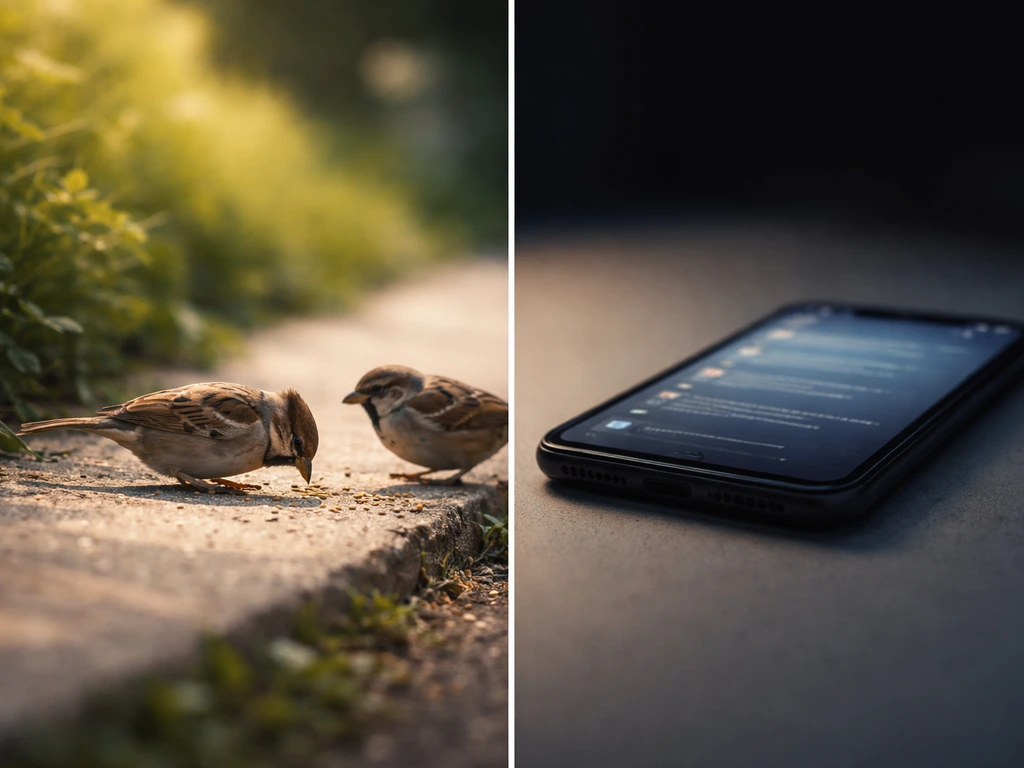
What 'bird behavior' actually means in plain English
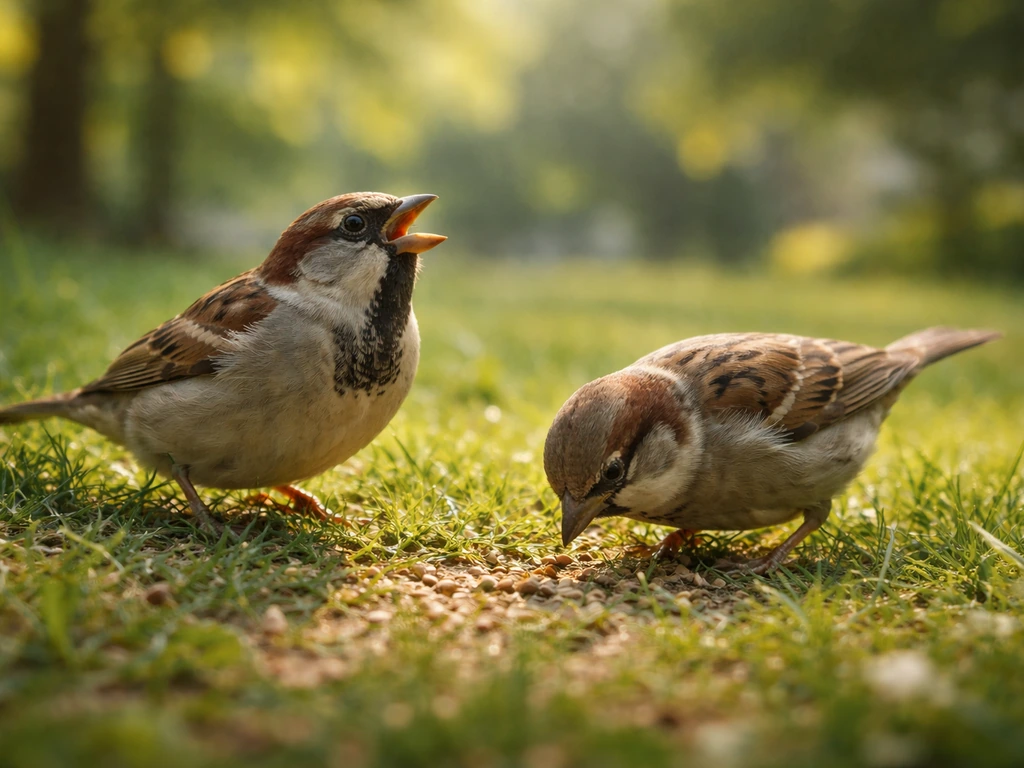
Outside of slang, 'bird behavior' is a perfectly literal phrase used in science and nature writing to describe how birds communicate, move, feed, and interact with their environments. Wildlife researchers study things like how city birds have grown less fearful of humans over generations, or how flocking patterns help birds avoid predators. Ecology writers use 'baffling bird behavior' the same way you'd use 'strange dog behavior,' meaning observable actions of the animal.
So the phrase has two completely different lives depending on where you see it. In a nature documentary or a science article, it's literal. In a text message, a social media comment, or on Urban Dictionary, it's almost always slang for acting foolish or being easily manipulated, usually directed at a woman.
The Urban Dictionary angle: what 'bird' and 'bird behavior' mean as slang
On Urban Dictionary, 'bird' by itself is defined as 'generally a girl or young woman who comes across as vain, ditzy, stupid or useless,' with the example sentence 'Quit talking about your hair, you dumb bird.' That base meaning is what 'bird behavior' builds on. When someone calls an action 'bird behavior,' they're saying the person is acting like that: gullible, shallow, or oblivious. It's dismissive slang with a clear insulting edge.
What makes Urban Dictionary tricky is that 'bird' has many unrelated slang entries depending on the region and the contributor. In some northern U.S. and Canadian slang, 'bird' is slang for penis. In British English, calling someone a 'bird' is a casual (and much less hostile) word for a woman or girlfriend, similar to how 'chick' is used in American English. Urban Dictionary hosts all of these at once, contributed by different people with no single editorial standard, so the meaning you're looking for depends entirely on which entry or sentence you actually encountered.
Other 'bird' compounds on Urban Dictionary go even further. 'Dirty bird,' 'carrier pigeon,' and 'bird out' all carry sexual or relationship-related slang meanings that have zero connection to ornithology. This is worth knowing because if you search 'bird behavior urban dictionary' expecting one clean answer, you'll find a patchwork of entries written by different contributors at different times.
Bird idioms and phrases tied to behavior (the ones you actually hear)
A lot of the most recognizable 'bird' phrases in everyday English describe behavior metaphorically, and they've been around long enough that most people don't even register them as bird-related anymore. Here are the main ones worth knowing:
- The early bird catches the worm (also said as 'the early bird gets the worm'): Showing up first or acting promptly puts you at an advantage. It's a conventional idiom recorded in the Cambridge English Dictionary, not a literal description of bird feeding habits.
- A bird in hand is worth two in the bush: What you already have is more valuable than something uncertain you're chasing. Used in everyday talk when someone is tempted to gamble a sure thing for a bigger but riskier payoff.
- Flip the bird: To make an obscene gesture with the middle finger. Widely used and widely understood in American English.
- Birds of a feather flock together: People with similar personalities, habits, or backgrounds tend to stick together. Wikipedia classifies this as an English proverb, and Urban Dictionary echoes the same social meaning.
- Free as a bird: Completely unrestricted, unburdened by responsibilities or constraints.
- Eat like a bird: To eat very little. Usually used to describe picky or light eaters.
- A little bird told me: A way of saying you heard something through informal channels without naming your source.
Each of these uses 'bird' to describe a human behavior or situation, not an actual animal. That's exactly the same logic behind the Urban Dictionary slang, it's just that those older idioms have become so standard they've crossed into formal dictionaries, while newer slang like 'bird behavior' is still in the casual, crowdsourced lane.
Bird symbolism in literature and culture: why this keeps coming up
Birds have been used as symbols in language and storytelling across essentially every culture, which is a big reason why bird-related expressions keep multiplying. Wikipedia's 'Human uses of birds' entry notes that perceptions of bird species vary widely across cultures, and that's visible in how different birds carry different connotations in language.
| Bird | Common symbolic meaning in language/literature | Example usage |
|---|---|---|
| Dove | Peace, innocence, love | 'They released doves at the ceremony' (peace gesture) |
| Raven | Death, mystery, ill omen | Poe's raven as a symbol of grief and foreboding |
| Owl | Wisdom, knowledge, sometimes death | 'Wise as an owl' in everyday compliments |
| Crow | Cunning, bad luck, or intelligence depending on culture | Counting crows superstition ('one for sorrow, two for joy') |
| Eagle | Power, freedom, national pride | Used in national emblems and political rhetoric |
| Pigeon / carrier pigeon | Message-carrying, but also Urban Dictionary slang for infidelity | Literal vs. slang meaning diverge sharply here |
When you see 'bird' used in a poem, song lyric, or book, it's worth pausing to ask which layer is operating: is this literal bird imagery, a recognized idiom, or a cultural symbol tied to a specific species? The answer changes the meaning of the whole sentence. A character described as 'free as a bird' is being liberated. A character described as a 'bird' by someone in their social circle might be being insulted.
This layering is also why phrases like 'birds of a feather' sit comfortably on both Urban Dictionary and in formal dictionaries. Wikipedia describes "Birds of a feather flock together" as an English proverb, a fixed cultural saying rather than a description of actual bird behavior blank" rel="noopener noreferrer">phrases like 'birds of a feather' sit comfortably on both Urban Dictionary and in formal dictionaries.. If you meant the proverb "birds of a feather," it means people with similar traits tend to stick together what does bird of a feather mean urban dictionary. The proverb has been around long enough to become standard, but it still shows up in casual conversation and slang contexts with the same core meaning intact. If you're curious how that specific phrase breaks down, it's worth a look alongside similar entries like 'bird on a wire,' which carries its own symbolic weight in song and literature. If you meant the phrase "birds of prey" instead of bird slang, that term refers to predatory raptors. If you also meant “bird on a wire,” it often shows up as a symbolic image tied to standing out, longing, or a certain kind of vibe in songs and stories.
How to actually use Urban Dictionary without getting misled

Urban Dictionary is crowdsourced, meaning anyone can submit a definition and it goes live after a basic vote. Wikipedia describes the site as one where 'defining' a word doesn't require a strict or authoritative definition, just a description of how someone uses it. Wikipedia notes that on Urban Dictionary, “to define” a word or phrase does not necessarily mean giving a strict definition, and the entry can be a description of word use, including sexually explicit content blank" rel="noopener noreferrer">“to define” a word or phrase does not necessarily entail providing a strict definition. That's useful for catching slang early, but it also means you'll find contradictions, regional variations, outdated entries, and occasionally explicit or offensive content that tells you more about the contributor than the word itself.
Here's how to read an Urban Dictionary entry without being tripped up:
- Check the date. The 'bird behavior' entry was submitted in August 2021. Slang shifts fast, and a five-year-old entry might already feel dated in 2026.
- Read the example sentence, not just the definition. The example is usually where you see how it actually gets used in conversation. For 'bird behavior,' the example makes it clear this is about calling someone gullible, not describing how birds act.
- Look at the upvote/downvote ratio. Highly upvoted entries tend to reflect real usage. Entries with more downvotes might be a personal joke, a very niche regional term, or flat-out wrong.
- Cross-check with another source. If a word or phrase also appears on Dictionary.com, Merriam-Webster, or Cambridge, you know it has enough mainstream traction to be considered established slang rather than one person's invention.
- Watch for the gender or group being referenced. Many Urban Dictionary 'bird' entries are specifically gendered insults. Knowing that context tells you whether you're looking at general slang or targeted language.
For what it's worth, Dictionary.com does document 'bird' as an informal slang term for 'a girl or young woman,' which confirms that the Urban Dictionary usage isn't totally fringe. It's just more pointed and dismissive in the slang version than in everyday British English usage.
What to look up next, based on what you actually meant
Where you go from here depends on why you searched this in the first place. Here's a quick breakdown:
- If you saw 'bird behavior' in a text or social media post and it was directed at someone: It's almost certainly the Urban Dictionary slang meaning, calling someone gullible or naive. No deeper research needed.
- If you're writing something and want to use bird-related language meaningfully: Start with the idioms list above, then look into specific bird species symbolism (raven, dove, owl) for the tone you want. Literary uses of birds run deep.
- If you saw 'Bird Up' used as a retort or reaction: That's its own separate slang entry with a completely different meaning and feel. It functions more like a dismissive comeback than an insult about someone's intelligence.
- If you're reading 'birds of a feather' somewhere and want the full picture: That phrase has both a formal proverb history and an Urban Dictionary presence, both pointing to the same social meaning about people grouping by similarity.
- If the phrase was in a nature article or science context: That's literal bird behavior research. Search the species name plus 'behavior' for specific information (e.g., 'crow behavior' or 'urban pigeon behavior').
- If you came across 'you're a bird' directed at someone: That phrasing carries its own slang weight and is worth looking up specifically, as it can shift in meaning depending on tone and regional context.
The fastest way to decode any bird-related phrase you encounter is to look at who's saying it and what they're reacting to. Slang 'bird' is almost always about a person's behavior or personality. Symbolic 'bird' is about evoking a feeling or cultural meaning. And literal 'bird behavior' is just wildlife writing. Once you know which lane you're in, the meaning clicks into place immediately. If you want the exact definition you saw online, check the specific Urban Dictionary entry and the example sentence it gives.
FAQ
How can I tell quickly whether “bird behavior” is literal wildlife language or Urban Dictionary slang?
Check the surrounding context for human targets and social judgment. If the sentence names a person, uses an insult, or mentions dating, naivety, or “bro” style reactions, it is slang. If it discusses feeding, flocking, communication, or behavior in an article-like tone, it is literal.
If someone says “that’s bird behavior,” what does it usually imply about the person being criticized?
It typically frames the target as foolish, gullible, or shallow, often with a gendered edge (commonly directed at a woman). The speaker is usually not describing an actual action pattern, they are dismissing the person’s judgment.
Why does Urban Dictionary give different meanings for “bird,” and how do I pick the right one?
Urban Dictionary entries are contributed by different people and can represent unrelated slang meanings. Pick the meaning that matches the exact sentence you saw, because the same word can refer to a woman, a casual girlfriend term in some contexts, or explicitly sexual slang in others.
Is it common for “bird” slang to overlap with other slang words like “chick,” and does it change the tone?
Yes. Some regions use “bird” similarly to “chick,” which can be casual rather than strongly insulting. However, “bird behavior” tends to be more pointed because it is used as an accusation about how someone is acting, not just a neutral label.
What’s the risk if I trust a single screenshot or vague quote from Urban Dictionary?
A screenshot can omit the key context, especially the example sentence that reveals whether the entry is gender-insult slang or something else. Without the example line, you can easily apply the wrong meaning, particularly with words like “bird” that have multiple, unrelated slang entries.
Does “bird behavior” ever appear in formal writing, and if so, how is it different from slang?
In science and nature contexts it refers to observable actions, such as how birds communicate, forage, or respond to predators and humans. The tone is explanatory, not personal or insulting, and it does not rely on targeting a specific individual’s intelligence or social choices.
If I’m reading lyrics or a poem and see “bird,” how do I know whether it’s idiom, symbol, or literal?
Look for the implied theme. “Free as a bird” type phrasing usually means liberation (idiom). If the verse uses birds to convey longing, standing out, or identity, it is more likely symbolism. If it describes actual flight, feeding, nests, or species traits, it is literal imagery.
Can “bird behavior” be used in a way that is not gendered?
It can happen, but the specific Urban Dictionary definition described in your scenario is gendered and insulting. If the speaker removes the gendered framing and just criticizes behavior generally, it may be a broader insult, but you should still expect the original phrasing to carry gendered baggage.
What should I do if I want the exact meaning I saw, but the entry has changed or the quote is incomplete?
Search the exact phrase plus any distinctive words from the example line (names, insults, or the full comment). Urban Dictionary entries can be updated or removed, so the example sentence is the most reliable anchor for interpretation.
Could “bird behavior” be part of another phrase, and how do I avoid missing that?
Yes. Sometimes “bird” is embedded in a longer idiom or compound with a specific meaning (for example, phrases where “bird” links to relationships or sex). If the text includes neighboring words like “out,” “dirty,” or relationship references, interpret it as a compound rather than treating “bird behavior” as the whole idea.
Next Article
You’re a Bird Meaning on Urban Dictionary: What It Means
Meaning of you re a bird on Urban Dictionary: flirting, teasing or insult, plus how tone and context change it