"The price of a bird" can mean two genuinely different things depending on where you found it: a literal dollar amount for buying a bird (a pet, a racing pigeon, a wild-caught specimen in historical trade), or a figurative expression where "price" means cost, consequence, or sacrifice and "bird" is being used as a symbol. Most of the time, context makes it obvious which one you're dealing with, but because both uses show up in search results, it's worth knowing how to tell them apart fast.
Price of a Bird Meaning: Idiom, Literal Cost, and Uses

Marcus Reeves
14 May 2026
What "price of a bird" could actually mean
Before diving into the deeper meaning, it helps to be honest about the ambiguity here. People search "price of a bird meaning" for at least three distinct reasons, and none of them is wrong.
- Literal cost: They want to know what a bird actually costs to buy, whether that's a $30 cockatiel from a breeder, a $328,000 racing pigeon, or the €1.6 million record sale of a champion racing pigeon named New Kim in 2020.
- Figurative or idiomatic: They've seen the phrase "the price of a bird" in a poem, song, book, or social post and want to understand what the writer meant by "price" in an emotional or symbolic sense.
- Specific quote or reference: They've encountered an exact line from a specific source (a story, a film, a piece of music) and are trying to track down what it means or where it comes from.
Older published literature uses the phrase literally all the time. An 1883 bird-keeping guide states plainly, "The price of a male bird is $5.00." An 1893 natural history book mentions "the price of a bird there" in the context of regional bird markets. Even a 19th-century story about a bird auction on an East India Company ship uses "the price of birds" in a straightforward commercial sense. So if you've landed on this page from a historical text, there's a real chance the answer is just: it means what it says.
When "price of a bird" is an idiom or metaphor
When a writer uses "the price of a bird" figuratively, they're drawing on a very old pattern in English where "price" means the cost of something you've earned, lost, or sacrificed, not a dollar amount. Think of how Tennyson writes about the "price of love" as grief, or how a phrase like "blank" rel="noopener noreferrer">what is the price of your heaven? PoemAnalysis's discussion of Tennyson's poem similarly frames blank" rel="noopener noreferrer">the "price of love" as grief and love’s emotional cost rather than a literal payment. " from contemplative literature asks about spiritual or moral sacrifice. In those frames, "price" is always about consequence, not commerce.
When a bird enters that figurative space, the meaning depends almost entirely on what the bird symbolizes in that specific context. Birds frequently stand for freedom, the soul, a fleeting moment, or something you can't hold onto. So "the price of a bird" figuratively can carry the weight of: what did you give up to have that freedom? If you meant the figurative sense, the bird on money meaning is essentially about what someone is paying in cost or consequence, not an actual price tag. What does it cost to keep something wild? What's the consequence of letting it go, or of catching it?
A poem that pairs "the price of what you have" with bird imagery is working in exactly this tradition. The bird isn't for sale. It's a stand-in for something valuable, and the "price" is the emotional or moral accounting of what it takes to keep, lose, or pursue it. That's the idiomatic heart of the expression.
How to read context and decide which meaning fits
The fastest way to figure out whether you're dealing with literal bird pricing or figurative meaning is to look at the sentence structure and the surrounding text. Here are the tells.
| Signal | Points to literal cost | Points to figurative meaning |
|---|---|---|
| Dollar signs or numbers nearby | Yes, almost always literal | Rarely, unless being ironic |
| The bird has a species name (pigeon, cockatiel, parrot) | Strongly literal | Possible, but species often adds symbolic detail |
| The bird is unnamed, abstract, or described emotionally | Unlikely | Very likely figurative |
| The sentence is from a market, guide, or news piece | Literal | Less common in those genres |
| The sentence is from a poem, song, or literary fiction | Uncommon | Almost always figurative |
| "Price" pairs with words like sacrifice, loss, freedom, or soul | No | Clear figurative usage |
Research into pet bird markets does confirm that literal price and perceived value are closely linked: studies on bird pricing note that "care devoted is likely to be associated with its value," which means even in commercial contexts, "price" carries weight beyond a number. That overlap is exactly why the figurative sense feels natural to readers.
Don't mix this up with other bird expressions
A few well-known bird idioms are easy to confuse with "the price of a bird," especially if you're working through a passage that uses bird imagery broadly.
- "A bird in the hand is worth two in the bush" is about relative value and risk, not about the price of any bird. It means what you already have is more valuable than what you might get. This is probably the most common bird-value idiom in English.
- "The early bird gets the worm" is about timing and reward, with no pricing dimension at all.
- "Flip the bird" is a gesture and has nothing to do with value or cost.
- "Bird" as drug slang refers to a quantity of a controlled substance, often a kilo. If you've seen "price of a bird" in street slang or hip-hop lyrics, this could be the relevant meaning. Related terms like "how much is a bird" in that context have their own dedicated usage in slang dictionaries.
- "Bird on money" (as in currency or in Basquiat's art) is a separate symbolic thread entirely, connected to imagery on banknotes and art commentary rather than idiom or price expressions.
The key distinction is that "the price of a bird" as an expression doesn't have a single fixed idiomatic meaning the way "a bird in the hand" does. It's a phrase that works by combining two loaded words (price and bird), and its meaning shifts based on who's using it and why.
Examples of how the phrase appears in real writing
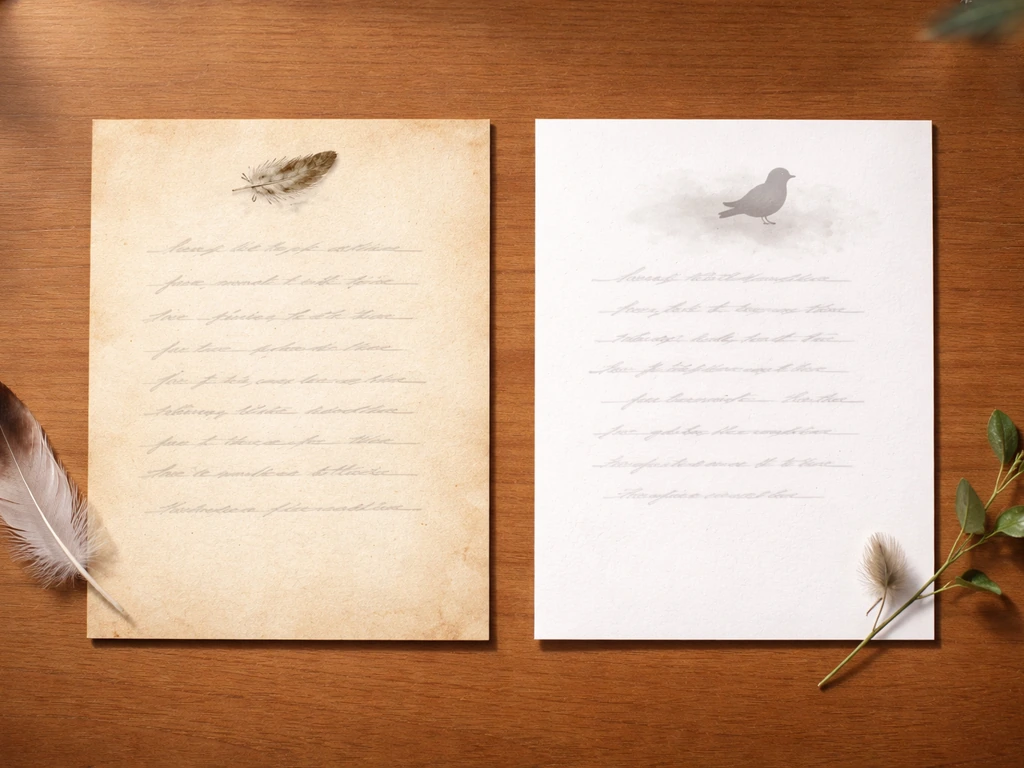
Here's what the phrase looks like across different registers, so you can compare the tone and spot which type you're dealing with.
- Literal (historical commerce): "The price of a male bird is $5.00, depending on the quality of the plumage." (A bird-keeping guide, 1883.)
- Literal (journalism): "The price of a swift pigeon: try $328,000." (A news headline reporting a racing pigeon auction.)
- Figurative (poetry): "Value what you have. The price of a bird is more than its feathers." (Poem using bird as a stand-in for something precious.)
- Figurative (spiritual/philosophical): "What is the price of your heaven?" (A rhetorical question in a meditative text where "price" means sacrifice or cost of belief.)
- Ambiguous (literary fiction): "He knew the price of the bird the moment it flew." (Here, the reader must decide: did he lose money, or lose freedom, or lose love?)
That last example is the kind of sentence that sends people to search engines. The writer has deliberately left the "price" open to interpretation. In literary analysis, that ambiguity is usually intentional and worth unpacking. Some users connect “bird on money” imagery to Basquiat, but the meaning is usually discussed through his themes of value, commerce, and coded symbolism rather than a single fixed definition.
How to find the original source and verify the meaning
If you've encountered "the price of a bird" in a specific place and you're not sure what it means or where it comes from, here's a practical process for tracking it down.
- Copy the exact phrase and put it in quotation marks in a search engine. "The price of a bird" in quotes will return much more targeted results than the phrase without quotes.
- Add a context word. If you found it in a song, add the artist name. If it was in a book, add the author. If it appeared on social media, add the platform name. This narrows the results dramatically.
- Check Google Books for historical uses. If the phrase feels old, searching it in Google Books with a date range will show you whether it appeared in 19th-century bird-keeping manuals (literal) or in poetry anthologies (figurative).
- Look for the surrounding sentence structure. If the original has a number or a species name, it's probably literal. If it has emotional language (grief, freedom, loss, soul), it's figurative.
- If you're dealing with slang, especially in music or street vernacular, check a slang dictionary or lyrics annotation site. "Bird" has a parallel life in drug slang where "price" is always literal and tied to quantity.
- When in doubt, read the paragraph before and after the phrase. Figurative uses almost always have emotional or thematic setup. Literal uses are blunt and informational.
One shortcut worth knowing: if the source is a song from the last 30 years and the word "bird" appears alongside words like "work," "flip," "move," or references to weight or quantity, you're almost certainly in slang territory, not symbolism. In slang contexts, people sometimes ask how much is a bird, meaning a certain amount of drugs or money rather than the literal cost of an animal. That's a different rabbit hole entirely, and it has its own set of meanings tied to drug market slang that are separate from the literary and idiomatic uses covered here. If you meant the slang use, the meaning behind “bird drug slang” depends on the specific community and the phrase it appears with drug market slang.
The short version if you're still not sure
"The price of a bird" is not a fixed idiom with one locked-in meaning. The term "payday bird meaning" refers to how that phrase is used and what symbolism or slang it carries in the context where you see it The short version. It's a phrase that shows up in literal contexts (actual bird prices in markets, guides, and journalism) and figurative ones (where it means the cost, consequence, or value of something symbolized by a bird). The way to know which you're dealing with is always the same: look at the genre, the surrounding language, and whether a number is anywhere nearby. If there's no number and the context is emotional or literary, the "price" is almost certainly metaphorical, and the bird is carrying symbolic weight. If there's a dollar sign or a species name and it's from a practical or news source, it's literal. Both uses are completely legitimate, and both are common enough to land in search results for the same phrase.
FAQ
How can I tell if “the price of a bird” is literal (money) or figurative (cost/consequence)?
Check for a numeric cue (dollar sign, range like “$5.00,” or species and marketplace wording like “breeding,” “auction,” “market,” “specimen”). If the sentence also includes verbs about buying, selling, or trading, treat it as literal pricing.
Is there one fixed “idiom meaning” for “the price of a bird,” or does it change?
The figurative reading is about what you paid in consequence, loss, or sacrifice, not a fixed idiom like “a bird in the hand.” So the exact meaning depends on what the bird symbolizes in that passage (often freedom, transience, or something you cannot keep).
Can “bird” in “price of a bird” refer to slang instead of a real animal?
Yes, especially in lyric or street-talk contexts where “bird” can be code for money or drugs. In those cases you may see nearby slang words like “work,” “flip,” “move,” quantities, or talk of weights. The presence of slang vocabulary is your strongest tell.
What if a text seems to use the phrase both ways at once?
If you see both elements in the same text, you may be dealing with layered meaning (literal commerce described with emotional language, or metaphorical “price” paired with market imagery). Quote the exact line and note whether the author asks about value, grief, morality, or sacrifice rather than listing a purchase.
If the passage is figurative, what does the “bird” usually symbolize?
In figurative uses, “bird” does not have to be the literal animal. Writers often use it as a symbol, so interpret “price” as “what it costs to have or lose that symbolic thing.” Look for emotional verbs like “lose,” “keep,” “hold,” “free,” “escape,” “wander,” or moral/spiritual framing.
Does the meaning depend more on the genre or on the exact sentence wording?
Try a genre-first approach. Historical guides, natural history, or auction/reporting tones point to literal pricing. Poetry, contemplation, or moral discussion tones point to metaphorical “price.” If the source is a modern song, also check for slang keywords and quantity language.
What should I do if there is no dollar amount in the text?
If there is no number anywhere in the surrounding paragraphs, and the text uses emotional or moral language, assume the “price” is metaphorical. Then interpret it as an accounting of consequence, not a monetary conversion, even if the writing mentions “value.”
What common mistake do people make when they try to translate “the price of a bird”?
Avoid treating it like a dictionary-locked idiom. Instead, identify what the writer is “charging” you for (freedom, love, heaven, access, safety, possession) and then paraphrase the line with “the cost of…” in plain language.
Next Article
Bird on Money Basquiat Meaning: Identify the Artwork and Symbolism
How to identify the Basquiat bird on money image and interpret its symbolism of value, power, fame, and exploitation