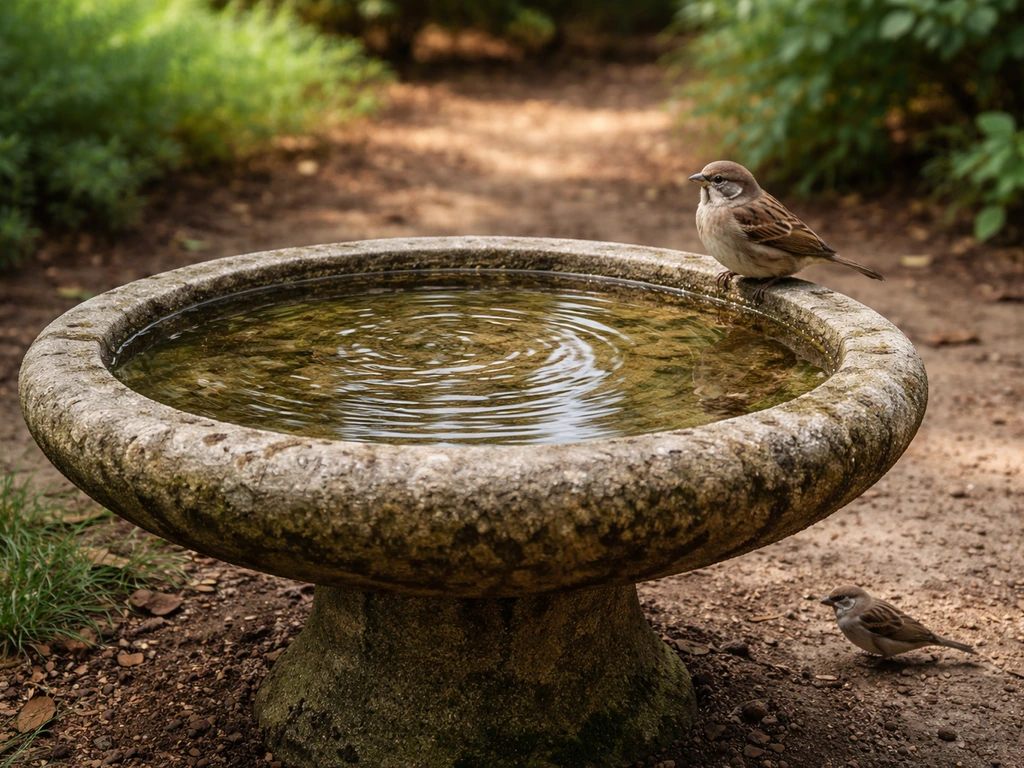
"A bird bath is for foul play" is not a real, established idiom. You won't find it in Merriam-Webster, Cambridge, Oxford, or any major phrase dictionary. What you're most likely dealing with is either a misquoted saying, a playful original pun someone coined, or a phrase lifted from a specific creative source like a riddle, puzzle, or piece of fiction.
A Bird Bath Is for Foul Play Meaning and How to Use It

Marcus Reeves
16 May 2026

If you meant a different slang phrase like “bird chest,” check how it’s used and what it refers to in the specific context you saw it what does bird chest mean slang. If someone said it to you and you're trying to decode it, the most useful starting point is understanding that "foul" is doing double duty here: it nods to "fowl" (birds) while invoking the real English phrase "foul play," meaning trickery, wrongdoing, or suspicious behavior.
Is this a real idiom or a misquote?
It's almost certainly not a real idiom in the traditional sense. Idioms get that status by showing up consistently across speakers, cultures, and reference works over time. "A bird bath is for foul play" doesn't clear that bar. Searching major resources like Merriam-Webster, Cambridge Dictionary, and Phrase Finder turns up nothing connecting "bird bath" to "foul play" as an established pairing.
The phrase does appear on at least one website as an explained expression, but that site isn't a recognized linguistic authority, and a single low-traffic explanation page isn't the same as an idiom being recorded and defined by credentialed lexicographers. This kind of “A Bird Bath Is for Foul Play Meaning Explained” variant is discussed on a low-authority explanation page, but it does not operate as a standard proverb or idiom listing in major dictionaries.
So where does it come from? Most likely one of three places: a riddle or joke where the punchline is the wordplay itself ("What's a bird bath for? Foul play!"), a misremembered or mashed-up version of something the reader half-heard or half-read, or a deliberately constructed pun phrase someone invented and shared online. All of those are legitimate uses of language, but none of them make it a proverb with a fixed, agreed-upon meaning the way "a bird in hand is worth two in the bush" does.
What it actually means, in plain English
Even if it's not a dictionary idiom, the phrase communicates something clear: trickery, deception, or suspicious behavior is at play. "Foul play" on its own is a well-documented English expression. Merriam-Webster defines it as intentional wrongdoing or unfair conduct, and Cambridge echoes that with definitions centered on illegal or unfair behavior and suspicion of a non-natural cause (especially in crime contexts). When you attach "bird bath" to it, you get a pun: a bird bath is literally a place for fowl (birds) to bathe, and "fowl" sounds exactly like "foul." The whole construction is a setup for that sonic payoff.
In practical terms, if someone uses this phrase to describe a situation, they're almost certainly pointing at deception, cheating, or something shady going on. The bird bath is the vehicle; foul play is the message. Think of it like a wordplay wrapper around a real warning.
How tone and intent shape how this lands
Context changes everything with a phrase like this. When someone drops it in casual conversation, it's usually playful, a joke or a gentle nudge that something seems off. In writing, especially in mystery fiction, cozy crime stories, or puzzle books, it might show up as a winking in-joke or a chapter title. In a competitive setting like a game or sport, it could be a lighthearted accusation: "That move? That's a bird bath situation right there." The tone is almost always at least slightly humorous because the pun structure signals that the speaker is being clever, not gravely serious.
Where it would feel out of place is in a formal or solemn context. If someone is genuinely alleging criminal wrongdoing, they'd use "foul play" on its own, not dressed up in the bird bath costume. So if you see this phrase and the setting is clearly playful, lean into the pun interpretation. If the setting is serious and someone seems to mean it earnestly, there's a good chance they've mixed up their phrasing. If you were wondering what the term “bird” stands for as slang, it depends on the community, platform, and context bird stands for slang.
Bird symbolism that makes the metaphor work
Birds carry a lot of symbolic weight in language, and a lot of that weight is tied to cunning, trickery, and hidden intent. In slang, calling something a “bird” can be a shorthand for a particular person or role in a scene, depending on the context Birds carry a lot of symbolic weight in language. Ravens and crows are classic symbols of mystery and ill omen across European and Indigenous traditions. Magpies are associated with thievery and deception. Even the simple act of a bird bath, birds gathering, splashing, and dispersing, evokes a scene that's chaotic, communal, and slightly unpredictable. Pair that imagery with "foul play" and you've got a metaphor that's thematically rich even if it's not old.
The "fowl" and "foul" homophone is the engine here, but the bird symbolism adds texture. Birds are often messengers in folklore, carrying warnings or secrets. A bird bath could symbolically be a gathering place where those who traffic in mischief meet and exchange information under the guise of something innocent and ordinary. That layered reading is why this kind of phrase works as a title, a chapter heading, or a riddle punchline even without centuries of idiom history behind it.
This connects to a broader family of bird-related slang and idiom that this site covers, from what "bird" means in New York slang to what a "bird bath" means on its own as a slang term. If you came across the term “bird bath” as slang, it can mean something more metaphorical than the literal object what a “bird bath” means on its own as a slang term. .
If you’re trying to decode the phrase "a bird bath is for foul play" in slang terms, it helps to know what “bird” can mean in contexts like New York slang what "bird" means in New York slang. In slang, a “bird” can also be a code word for a person, depending on the regional scene what “bird” means in slang. Bird slang can be broader than this one phrase, so if you're wondering what “bird” means in slang, that’s a related angle to check next what "bird" means in New York slang.
The common thread is that birds and bird-related language consistently signal something more than surface value, whether that's hidden meaning, coded communication, or metaphorical shorthand.
Where you'll actually run into this phrase
Based on where this kind of punny bird language tends to show up, here are the most likely places you'd encounter "a bird bath is for foul play":
- Riddle books or joke collections aimed at kids or puzzle enthusiasts, where the answer to "What is a bird bath for?" is "Foul play!"
- Mystery or cozy crime fiction, where authors use bird and animal wordplay in titles, chapter headers, or character dialogue to signal genre tone
- Board games or trivia nights where puns on animal names are a category
- Social media posts or memes built around bird jokes, especially on accounts dedicated to puns or dad jokes
- Creative writing workshops or writing prompts where participants experiment with idiomatic-sounding invented phrases
- Sports commentary or competitive gaming, used loosely to accuse an opponent of bending the rules in a tongue-in-cheek way
If you encountered the phrase in one of these contexts, the punny interpretation is almost certainly right. If you found it in a textbook or formal document, it was either misquoted or used ironically.
Examples in action, and how to respond or rephrase
Situations and what they signal
| Scenario | How it's used | What the speaker likely means |
|---|---|---|
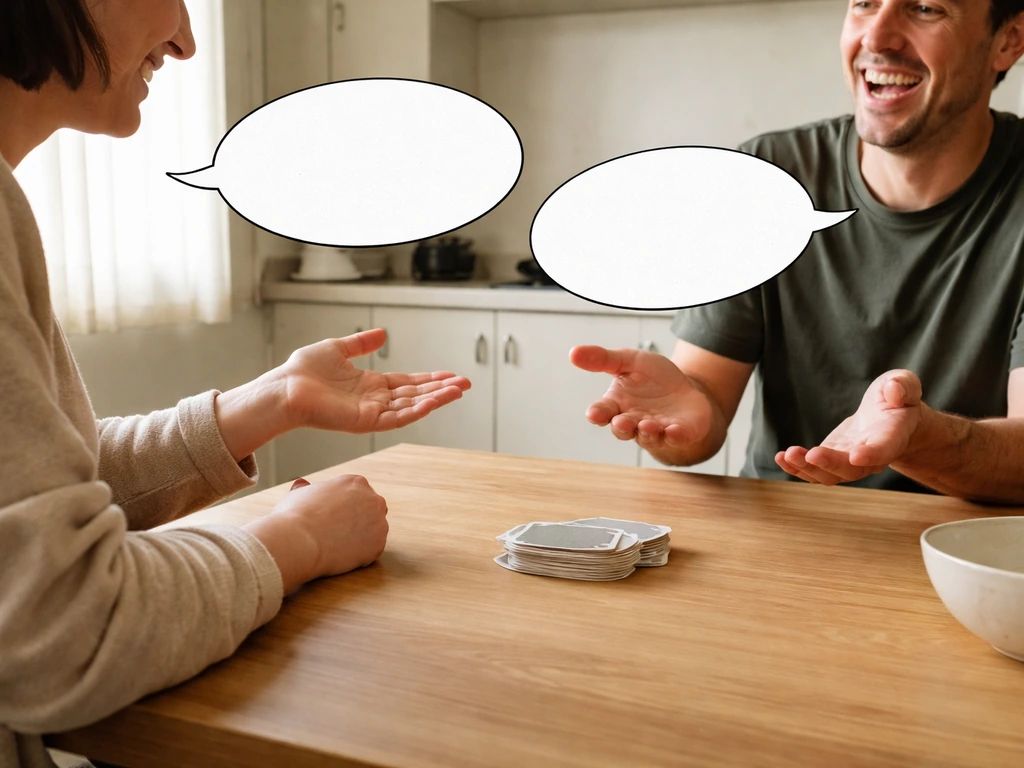
| Friend accuses you of cheating at cards | "You know what a bird bath is for, right? Foul play." | Playful accusation, you cheated or bent a rule |
| Chapter title in a cozy mystery novel | "Chapter 4: A Bird Bath Is for Foul Play" | Wordplay signal that something suspicious is about to happen |
| Riddle at a trivia night | "What is a bird bath good for?" | Expected answer is "Foul play!" as a pun punchline |
| Online debate about a competition | "This tournament result? Bird bath territory." | Shorthand for suspecting unfair or dishonest conduct |
How to respond when someone says it
If it's clearly a joke or pun, lean in: "Ha, I see what you did there, fowl and foul." That acknowledges the wordplay without overexplaining it. If someone seems to be using it as a genuine idiom to make a point about dishonesty, you can gently confirm what they mean: "Are you saying you think something shady happened?" That respects their intent while bridging any confusion. And if you're the one who wants to use it correctly, the most natural framing is as a punchline or a playful accusation, not as a sober proverb.
How to rephrase if the idiom isn't landing
- Use "foul play" on its own: "I suspect foul play here." Clean, direct, and universally understood.
- Use "something fishy is going on" if you want a similar animal-adjacent idiom that everyone knows.
- Use "that's not playing by the rules" for a competitive context without the wordplay.
- If you want the pun, commit to it as a joke: "You know what that move is? Bird bath level foul play."
How to track down what the phrase actually said in your source
If you came across this phrase in a specific book, show, game, or online post and you're not sure you remembered it correctly, here's how to chase it down accurately.
- Go back to the exact source and look at the surrounding lines. A pun phrase rarely stands alone. The lines before or after usually set up the joke or make the context obvious.
- Check the spelling carefully. Some versions swap "bird bath" for "birdbath" (one word), or the phrase might read "a bird's bath" instead. Small changes can affect search results significantly.
- Search the exact phrase in quotation marks using a search engine: "a bird bath is for foul play" with quotes will return only pages that contain that exact string, not loose matches.
- If you found it in a book, search the title plus "foul play" or "fowl play" (both spellings) to find whether the author used it as a deliberate pun or chapter motif.
- Check whether the original might actually say "fowl play" (spelled with a W) rather than "foul play." That spelling makes the bird connection explicit and is common in humorous or punny writing.
- If no exact match turns up, consider that you may be conflating two different phrases: "foul play" (the real idiom) and something you read about bird baths separately. Both are real; the combo may have been constructed in your memory.
The most likely alternative the phrase is pointing toward, if it's a misquote, is simply "foul play" used in a bird-themed context. If you're wondering, “what does bird bath mean,” in this context it's essentially a playful way to hint at trickery or foul play. Writers who work with bird imagery often use "fowl play" as a deliberate variant spelling to signal humor. If you see that version, it's intentional wordplay, not a typo. And if someone used it as a pun riddle, the answer you were supposed to land on is just: trickery, deception, something shady. That's the meaning, whether the phrasing was exact or not.
FAQ
If “a bird bath is for foul play” is not a real idiom, what does it mean in practice?
It usually means a joke or wordplay version of “foul play,” pointing to cheating, trickery, or suspicious wrongdoing. The “bird bath” part is there to signal the pun (fowl/foul), not to add a separate literal meaning.
How can I tell whether someone is joking or making a serious accusation when they use this phrase?
Ask yourself whether the speaker had a playful tone, used it as a punchline, or included other puns. In serious contexts, people typically just say “foul play” or “criminal wrongdoing,” so the bird bath framing often indicates the claim is comedic or nonliteral.
Should I take it as an allegation of crime, or is it generally just playful?
No. “Foul play” is the established concept, and “bird bath” is the invented wrapper. If you see the phrase used earnestly and the context is crime or harm, treat it as an implied reference to “foul play,” but verify what they are actually alleging.
Does “bird” in this phrase have a special slang meaning?
In most cases, “bird” does not indicate a standardized slang category like “a woman” or “a person.” Here, “bird bath” is mainly a homophone device for “fowl,” so the key word is “foul play,” not any independent bird slang meaning.
What’s the best way to correct it if I think I heard the phrase wrong?
If you suspect misquotation, the safest correction is to replace the phrase with “foul play” and keep the intended idea (deception or wrongdoing). If you can, check the original source (book page, game prompt, post) to see whether it was written exactly as a riddle answer.
How do I interpret it if I saw it as a riddle answer or chapter title?
Look for a setup-and-payoff pattern. Many versions are structured like a riddle question where the answer is “foul play.” If it appeared as a chapter title or puzzle answer, the “meaning” is likely the wordplay itself, not a proverb you can apply broadly.
What are common mistakes people make when using or decoding this phrase?
A common mistake is assuming it is an established English saying, then trying to use it as if everyone will understand it. Use it only when you know the audience shares the context (jokes, puzzle communities, specific fandoms). Otherwise, stick to “foul play” or “something shady happened.”
What does it imply in a game or sports context where people accuse each other of “foul play”?
If the phrase shows up in a sports or gaming argument, it often means “that was cheating” or “that move was unfair,” but it still may be playful. Decide whether to treat it as a complaint you should escalate by checking what rule was allegedly broken.
Next Article
What Does Bird Bath Mean? Literal Meaning Explained
Meaning of bird bath: a garden container where birds bathe, with examples and no confusing idiomatic usage.