
In drug slang, 'a bird' almost always means one kilogram of cocaine. That's the core answer. The DEA's own drug slang and code word list (DIR-020-17) includes 'Bird' as a code word associated with both cocaine and heroin, and Green's Dictionary of Slang documents it specifically as a large quantity, most commonly one kilo of cocaine. If you hear someone say 'I need a bird' or 'he moves birds,' they're almost certainly talking about kilogram quantities of a drug, with cocaine being the most frequent referent. Once you know that, most sentences containing the word click into place pretty fast.
What Is a Bird in Drug Slang? Meanings and Context Clues

Marcus Reeves
21 Apr 2026

What 'Bird' Actually Means in Drug Slang
The dominant meaning is straightforward: one bird equals one kilogram of cocaine. This usage is deeply embedded in street slang, rap lyrics, and law-enforcement databases alike. You'll see it referenced in hip-hop lines where someone mentions 'moving birds' or counting 'eleven birds,' and the meaning is always the same: kilos. This isn't a fringe interpretation. It's documented by the DEA, referenced in slang dictionaries, and consistently confirmed in community discourse across decades.
There's also a secondary, less common usage where 'bird' can refer to heroin, as noted in official DEA code-word documents. This is rarer in casual conversation and tends to appear in specific regional or contextual settings. When heroin is the referent, you'll usually see additional context clues in the conversation, such as references to needles, 'dope,' or specific heroin-related slang nearby. If no such context exists, cocaine is the safer default assumption.
The word has also spawned a family of related sub-terms. 'Birdie powder' appears in DEA slang lists, 'snow bird' references cocaine (snow being another cocaine code word), and blank" rel="noopener noreferrer">'bird head' turns up in glossaries like Erowid's drug slang vault. Each of these carries its own specific shade of meaning, which we'll cover in the related terms section below. The important thing to know upfront is that blank" rel="noopener noreferrer">'bird' by itself almost always points to a quantity of cocaine, not a role or a person.
How 'Bird' Shows Up in Real Sentences
Slang only makes sense in motion, so here's how 'bird' actually functions in conversation and lyrics. The term typically appears as a countable noun describing a unit of drugs, a possession, or a transaction. No authoritative phrase corpus exists for street-level conversation, but the usage patterns are consistent enough to map out clearly.
- 'He's moving birds' — someone is selling or distributing kilograms of cocaine
- 'I got a bird lined up' — a kilogram purchase or delivery is arranged
- 'They found two birds in the trunk' — law enforcement or someone else discovered two kilos
- 'A verse worth eleven birds' (rap reference) — lyrically equating lyrical value to kilos
- 'Half a bird' — half a kilogram, or roughly 500 grams
- 'Whole bird' — one complete kilogram, sometimes contrasted with 'half a bird'
Notice that in all these patterns, 'bird' functions as a unit. It's being counted, divided, moved, or discovered. That's your biggest structural clue. When 'bird' is used as a measurable object in a sentence, you're almost certainly looking at drug-quantity slang and not an idiom or a person reference.
Bird Slang vs. Actual Bird References: Don't Get Confused
This is where a lot of people trip up, especially if they're encountering the word out of context. English is packed with bird-related expressions that have absolutely nothing to do with drugs. 'A bird in the hand is worth two in the bush' is a proverb about certainty versus risk. 'Flip the bird' means to make an obscene hand gesture. 'Early bird gets the worm' is about punctuality. None of these carry any drug-slang meaning, and mixing them up with the drug-slang usage of 'bird' would be a significant misread.
There's also a whole category of actual bird symbolism, things like the raven representing death or mystery, the dove symbolizing peace, the owl standing for wisdom. These meanings come from literature, folklore, and cultural tradition, and they exist in an entirely different register from drug slang. If you're on a site discussing bird symbolism and someone mentions 'a bird of prey representing transformation,' that's not code for anything drug-related.
A good real-world example of how this confusion can escalate: in 1982, UPI covered a case where law-enforcement agents briefly treated a phrase like 'a kilo of toco toucan' as potential cocaine code, purely because of the kilo-and-bird association. That's how sticky the 'bird equals kilo' mental shortcut can become. In practice, most bird references in everyday language, literature, and cultural conversation are not drug slang. The drug meaning is specific to certain social contexts, not a universal hidden code.
| Expression | Type | Meaning |
|---|---|---|
| 'Moving birds' | Drug slang | Selling kilograms of cocaine |
| 'Half a bird' | Drug slang | 500 grams of cocaine |
| 'A bird in the hand' | Proverb/idiom | Something certain is better than something speculative |
| 'Flip the bird' | Gesture idiom | Making an obscene middle-finger gesture |
| 'Early bird' | Common idiom | Someone who acts or arrives early |
| 'The raven' / 'the dove' | Symbolism/literature | Cultural or spiritual meaning tied to that specific species |
Context Clues That Tell You Which 'Bird' You're Hearing
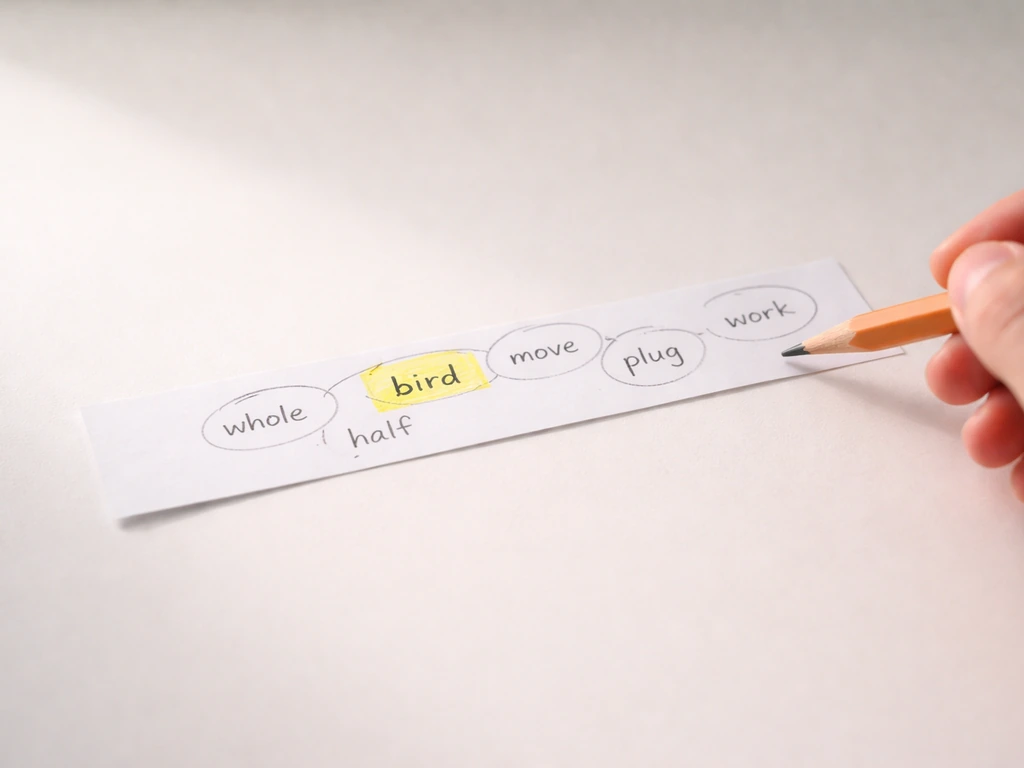
Context is everything with ambiguous slang. Here are the signals that reliably point toward the drug-slang meaning rather than a literal or idiomatic use of 'bird.'
Who's speaking and where
Setting matters more than the word itself. If you're hearing 'bird' in a conversation that involves street-level dealing, mentions of money in large cash amounts, references to 'work' (another drug slang term for supply), or discussions about police activity, you're in drug-slang territory. The same word in a birdwatching club or a literature class means something completely different.
Nearby words and phrase structure
Look for words adjacent to 'bird' in the sentence. Drug-slang usage clusters with terms like 'whole,' 'half,' 'move,' 'flip,' 'price,' 'plug,' 'work,' or specific drug names. If someone says 'the whole bird is going for thirty right now,' that's a price-per-kilo conversation. If the nearby words are about nature, flight, or wildlife, you're dealing with a literal meaning. If someone's talking about a specific person 'being a bird,' you might be in informant territory (discussed below), but even that reading needs supporting context.
Person vs. object reference

Pay attention to whether 'bird' is being used as a countable object or as a label for a person. 'He's got birds' points to a product. 'She's a bird' in certain contexts could be British slang for a woman, an insult, or potentially an informant reference, none of which are the same as the cocaine-quantity meaning. The drug-quantity usage treats 'bird' as a thing you move, buy, sell, or possess. Person-labeling uses of 'bird' work grammatically more like 'she is a bird' or 'that bird over there,' and they tend to appear in different social and regional contexts.
Online vs. in-person context
One specific trap worth flagging: if you've come across 'opium bird' online, that's a different beast entirely. If you came across the opium bird meme meaning online, treat it as an internet hoax instead of real drug slang, similar to how “bird equals kilo” has a specific street meaning. The 'opium bird' is an internet meme, a viral video hoax that spread as misinformation. It is not a stable, codified drug slang term in the way that 'bird equals kilo' is. Fact-checkers have documented it as meme content rather than genuine drug culture terminology. Don't conflate that viral label with the documented DEA-listed slang usage.
Related Drug Slang Terms Worth Knowing
Once you know 'bird,' you'll start encountering related terms that branch off from the same core meaning. Here's a quick map of the slang ecosystem around it.
- Birdie powder: another DEA-listed variant, referring to cocaine in powdered form
- Snow bird: combines 'snow' (cocaine slang) with 'bird,' reinforcing the cocaine-quantity connection
- Bird head: appears in Erowid's slang vault, indicating a sub-variant with its own specific connotation
- Whole bird / whole chick: a complete kilogram, often used in rap lyrics and street conversation
- Half a bird: 500 grams, a common transaction size below a full kilo
- The birds: can refer to multiple kilos or, in some uses, to Orioles tablets (the 'O's) as documented in Green's Dictionary of Slang
- Work: general slang for drug supply, often appears alongside 'bird' in dealing conversations
- Plug: the supplier, the person who has access to birds
If you're researching how 'bird' connects to specific substances, the sibling concepts of 'substance bird meaning,' 'addiction bird meaning,' and 'full bird meaning drugs' explore different facets of this slang family. And if you've stumbled onto the viral 'opium bird meme' or seen 'opium bird meaning' floating around online, those deserve their own look since they operate in internet-meme space rather than street-slang space.
What to Do If You're Hearing This in Real Life
If you're hearing 'bird' used in drug-slang contexts around you and you're trying to figure out what's actually going on, here's a practical approach that keeps you safe and non-confrontational.
- Don't assume immediately. Use the context clues above first. A single use of the word 'bird' in conversation is not conclusive. Look for the cluster of supporting terms before drawing conclusions.
- Ask indirect clarifying questions if you're in a safe position to do so. You don't need to confront anyone. A simple 'what do you mean by that?' or 'I'm not sure what you're referring to' gives the speaker a chance to clarify without escalation.
- If you're concerned about someone's drug involvement, lead with curiosity rather than accusation. Harm-reduction approaches emphasize nonjudgmental engagement. Starting with 'I've been noticing some things and I'm worried about you' lands very differently than 'I know you're dealing.'
- If you're a parent, teacher, or someone in a caretaking role and you've heard unfamiliar slang, consult resources like SAMHSA's helpline (1-800-662-4357) or a school counselor rather than trying to interpret or confront alone.
- If you believe you're witnessing actual drug activity and feel unsafe, contact local law enforcement. You don't need to decode slang to recognize a situation that feels dangerous.
- Trust your read of the situation over the word itself. Slang meaning shifts regionally and generationally. The safest interpretation process is always: setting first, surrounding words second, specific vocabulary third.
The most important thing to hold onto is that slang is not a perfect cipher. 'Bird' meaning one kilogram of cocaine is the most documented, most consistently used definition in drug slang, backed by DEA records, legal dictionaries, and community usage alike. But slang lives in context. The same word in a different room, with different people, means something entirely different. Reading that context accurately is the actual skill, and now you have the tools to do it.
FAQ
If “a bird” usually means one kilogram, can it ever mean something else?
Not necessarily. In most cases it means a kilogram, but people sometimes shorten phrases or swap specific drug names, so “bird” alone can still be ambiguous if the conversation lacks other quantity or pricing signals (for example, no mention of kilos, money amounts, “work” supply talk, or a specific drug).
What grammatical or sentence clues tell me “bird” is drug slang rather than normal English?
Assume the slang meaning only when the sentence structure treats “bird” like a measurable unit you can move, buy, sell, or count. If it is being used like a proverb, an insult, or an object of wildlife discussion, it is almost certainly not drug code.
What nearby words or number patterns are the best indicators that “bird” means kilos?
You can look for “quantity math” around it. Words like whole, half, quarter, ten, eleven, or price terms like going for, cost, or per tend to signal that “bird” is being used as a unit of weight, not as a person or a general nickname.
How do I tell whether “bird” is referring to heroin versus cocaine?
Yes, “bird” can also appear as a heroin-referent in certain code-word contexts, but it is rarer and usually comes with additional heroin-linked cues. If you do not see those cues, cocaine is the safer default interpretation.
Does “bird head” mean the same thing as “a bird”?
If someone says “bird head,” that is not the same as “bird.” In many slang ecosystems it signals a different category or role, so you should not assume it always equals a kilogram. Treat multiword forms as separate terms and verify the local meaning based on surrounding context.
What if “bird” is used to describe someone, could it still mean a kilogram?
Informant-style uses are possible with “bird” as a label for a person, but they require social context and consistent supporting language. If “bird” is used alongside buying, selling, moving product, or weight/counting language, it is far more likely to be the quantity code.
How can I avoid confusing drug slang with internet memes that use “bird”?
Online “bird” references are particularly prone to memes and misquotes. A good rule is to treat viral “opium bird” content as entertainment misinformation unless you see indicators that it is being used as stable slang in a realistic street, legal, or historical code-word setting.
What situations make “bird” meaning less likely to be drug slang?
“Bird” is best treated as a unit term, so it will often appear alongside transactions (moving, selling, purchasing) rather than emotions or general conversation. If the statement is about feelings, relationships, or everyday routines, the odds of drug-slang meaning drop sharply.
What’s a practical decision checklist for interpreting “bird” safely and accurately?
Don’t rely on one word alone. If you are trying to interpret a message, cross-check at least two context cues, such as quantity language plus a pricing or supply-related term. If you only have “bird” by itself, consider it inconclusive rather than definitive.
If “bird” is a kilo unit, how do I figure out which drug it refers to in a specific sentence?
If you need help determining the substance, the surrounding drug-specific terms matter more than “bird” itself. For example, if the sentence also includes a named drug or a clearly heroin- or cocaine-linked synonym, that can break the tie.
Next Article
Thirst Reckoned Bird North Meaning Explained and Decoded
Decode the riddle phrase thirst reckoned bird north meaning: idioms, symbolism, and direction clues to find likely inten